
White Bolognese
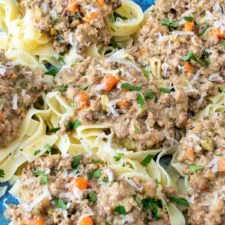
White Bolognese is a slow-simmered sauce of beef, pork, sausage and vegetables enriched with cream and cheese. Make it when you want a rich, silky pasta sauce with plenty of depth and enough to serve a crowd.
Ingredients
- 30 ml (2 tablespoons)extra-virgin olive oil
- 113 g (4 ounces)diced pancetta
- 30 ml (2 tablespoons)unsalted butter
- 450 g (3 cups)diced leeks, rinsed and cleaned of sand (about two small or medium leeks)
- 128 g (1 cup)diced carrots
- 100 g (1 cup)diced celery
- 30 ml (2 tablespoons)minced fresh garlic
- 680 g (1½ pounds)90/10 ground beef
- 454 g (1 pound)ground pork
- 227 g (½ pound)sweet Italian sausage, removed from its casings
- 1 pinchred pepper flakes
- 60 ml (¼ cup)white wine
- 710 ml (3 cups)chicken stock, homemade if possible
- 2 medium stemsfresh rosemary, chopped (or 10 ml (2 teaspoons) dried rosemary)
- 5 large leavesfresh sage, chopped (or 10 ml (2 teaspoons) dried sage leaves)
- 60 ml (¼ cup)chopped fresh Italian flat-leaf parsley (or 30 ml (2 tablespoons) dried parsley)
- 1 mediumParmesan rind (optional)
- 1.25 ml (¼ teaspoon)freshly grated nutmeg (or the same amount of ground nutmeg)
- 5 ml (1 teaspoon)kosher salt
- 2.5 ml (½ teaspoon)freshly ground black pepper
- 2bay leaves
- 480 ml (2 cups)half-and-half or double cream
- 50 g (½ cup)grated Parmesan cheese
- 225 g (8 ounces)mascarpone cheese
- 454 g (1 pound)fresh or dried pasta (the original recipe uses tagliatelle)
Instructions
- 1
Crisp the pancetta
In a lidded 5.7-litre (6-quart) Dutch oven, heat the olive oil over medium heat. When hot, add the pancetta and cook until crisp, about 5 minutes.
- 2
Cook the vegetables
Add the butter and, once melted, stir in the leeks, celery, carrots and garlic. Cook for 5 minutes.
- 3
Brown the meats
Add the beef, pork, Italian sausage and red pepper flakes. Cook for about 15 minutes, until the meat is no longer pink.
- 4
Add stock and herbs
Pour in the white wine to deglaze the pan. Once the wine has evaporated, add the stock, rosemary, sage, parsley, Parmesan rind if using, nutmeg, salt, black pepper and bay leaves.
- 5
Simmer the sauce
Stir in the cream and bring the mixture to a boil. Reduce to a low simmer, leaving the lid partly open, and cook for 2 hours, stirring every 30 minutes.
- 6
Remove whole pieces
Take out and discard the bay leaves and Parmesan rind.
- 7
Stir in cheeses
Mix the grated Parmesan and mascarpone into the sauce.
- 8
Adjust seasoning
Taste the sauce and add more salt and pepper as needed.
- 9
Cook the pasta
Cook the pasta according to the packet instructions, then drain it.
- 10
Toss with sauce
Toss the pasta with enough sauce for the number of servings you need.
- 11
Finish and serve
Serve with more Parmesan cheese sprinkled on top.
What is white Bolognese?
Bolognese is a meat sauce associated with Bologna and the Emilia-Romagna region of Italy. This white version uses no tomatoes: stock, wine and cream form the base, while several meats and slowly cooked vegetables build its savoury flavour.
Leeks, herbs and a little nutmeg give this version a fragrant, rounded character. A long, gentle simmer brings the ingredients together into a tender sauce for pasta.
Nutrition and macros by portion
The nutrition label shows one serving as written: 640 calories, 33g protein, 39g carbs, 39g fat.
| Portion | Adjustment | kcal | Protein | Carbs | Fat |
|---|---|---|---|---|---|
| Lighter | Use less cream and mascarpone | 448 kcal | 23g | 27g | 27g |
| This serving | As written | 640 kcal | 33g | 39g | 39g |
| Hungry | Add more pasta | 960 kcal | 50g | 58g | 58g |
The pasta and vegetables provide most of the carbohydrates, while the oil, pancetta, butter, cream and cheeses contribute much of the fat. Beef, pork, sausage and cheese provide the protein. To balance the plate, serve a portion with a generous side of vegetables or salad.
Build the flavour in stages
Pancetta: cooking it until crisp gives the sauce a savoury starting point. The butter then helps soften the leeks, carrots, celery and garlic.
Meat: beef, pork and Italian sausage bring different textures and flavours. Break up the mince as it cooks so it combines evenly with the vegetables.
Why the slow simmer matters
Low heat and time let the stock, cream, herbs and meat meld into a cohesive sauce. Keep the lid partly open as directed, and stir every 30 minutes to prevent the bottom from catching.
The simmer is long, so check that the sauce stays at a gentle bubble rather than boiling vigorously. If it looks as though it is sticking, stir and lower the heat.
Get a silky finish
Cream: adding it before the simmer gives it time to mingle with the stock and meat. The finished sauce should look rich and smooth, not sharply separated.
Cheese: stir in the Parmesan and mascarpone after removing the bay leaves and rind. This keeps the cheeses in the finished sauce and makes them easier to incorporate.
Choose and cook the pasta
Tagliatelle is the suggested pasta; its broad ribbons give the thick sauce plenty of surface to cling to. Fresh or dried pasta both work, so follow the packet instructions for whichever you have.
Toss only the amount of pasta you plan to serve with enough sauce to coat it. This keeps the rest of the sauce available for another meal.
Serving ideas
Finish each serving with extra Parmesan, as the recipe suggests. A simple green salad or steamed vegetables make a fresh contrast to the creamy, meat-rich sauce.
If serving all 12 portions, combine pasta and sauce in batches if needed so the pasta is coated evenly without being crowded.
Recipe notes & tips
- Rinse the leeks carefully so no sand remains between their layers.
- Keep the heat moderate while crisping the pancetta so it browns without burning.
- Stir regularly during the long simmer, especially around the base and corners of the pot.
- Remove both bay leaves and the Parmesan rind before adding the finishing cheeses.
- Toss only the pasta you need with sauce, rather than mixing the whole batch at once.
Variations
- Use dried herbs: Replace the fresh rosemary, sage and parsley with the dried amounts listed in the ingredients.
- Choose double cream: Use heavy cream instead of half-and-half for the richer option specified in the recipe.
- Skip the rind: Leave out the optional Parmesan rind and follow the rest of the method as written.
- Change the pasta: Use another fresh or dried pasta shape, cooking it according to its packet instructions.
- Adjust the heat: Add more or fewer red pepper flakes to suit your preference.
Common mistakes to avoid
- Skipping the leek rinse: Sand can remain trapped in the layers, so clean the leeks thoroughly before dicing.
- Boiling hard: A vigorous boil can make the sauce catch; reduce the heat to maintain a low simmer.
- Forgetting to stir: The sauce cooks for 2 hours, so stir it every 30 minutes as directed.
- Leaving in the bay leaves: Remove and discard them, along with the Parmesan rind, before serving.
- Mixing all the pasta at once: Toss only what you need with sauce so the remaining portions stay separate.
How to store
Refrigerate leftover sauce and pasta separately in airtight containers and use within 3 days. Reheat the sauce gently in a saucepan, stirring until hot; loosen it with a little stock or water if needed. Reheat pasta briefly in boiling water or toss it with warm sauce.
Frequently asked questions
Can I make the sauce ahead?
Yes. Cook the sauce, cool it and refrigerate it in an airtight container. Reheat it gently and cook the pasta when you are ready to serve.
Can I use dried herbs instead of fresh?
Yes. The recipe gives alternatives of 2 teaspoons each of dried rosemary and sage, and 2 tablespoons of dried parsley.
Do I have to use the Parmesan rind?
No. It is optional; leave it out if you do not have one, and follow the recipe as written.
Can I use a different pasta shape?
Yes. The recipe allows fresh or dried pasta and suggests tagliatelle, but another shape can be used. Cook it according to its packet instructions.
How do I know the sauce is ready?
Follow the specified 2-hour low simmer, stirring every 30 minutes. The sauce should be gently bubbling and the meat tender; stir if it starts to catch.
Can I freeze the sauce?
The sauce can be frozen in airtight portions, though cream-based sauces may change texture slightly after thawing. Thaw it in the refrigerator and reheat gently, stirring well.
Cook it from the original
This recipe comes from afamilyfeast.com. Their page has the author’s own photos, notes and tips — the best place to cook it from.
Open the recipe on afamilyfeast.com