
St Louis Style Ribs
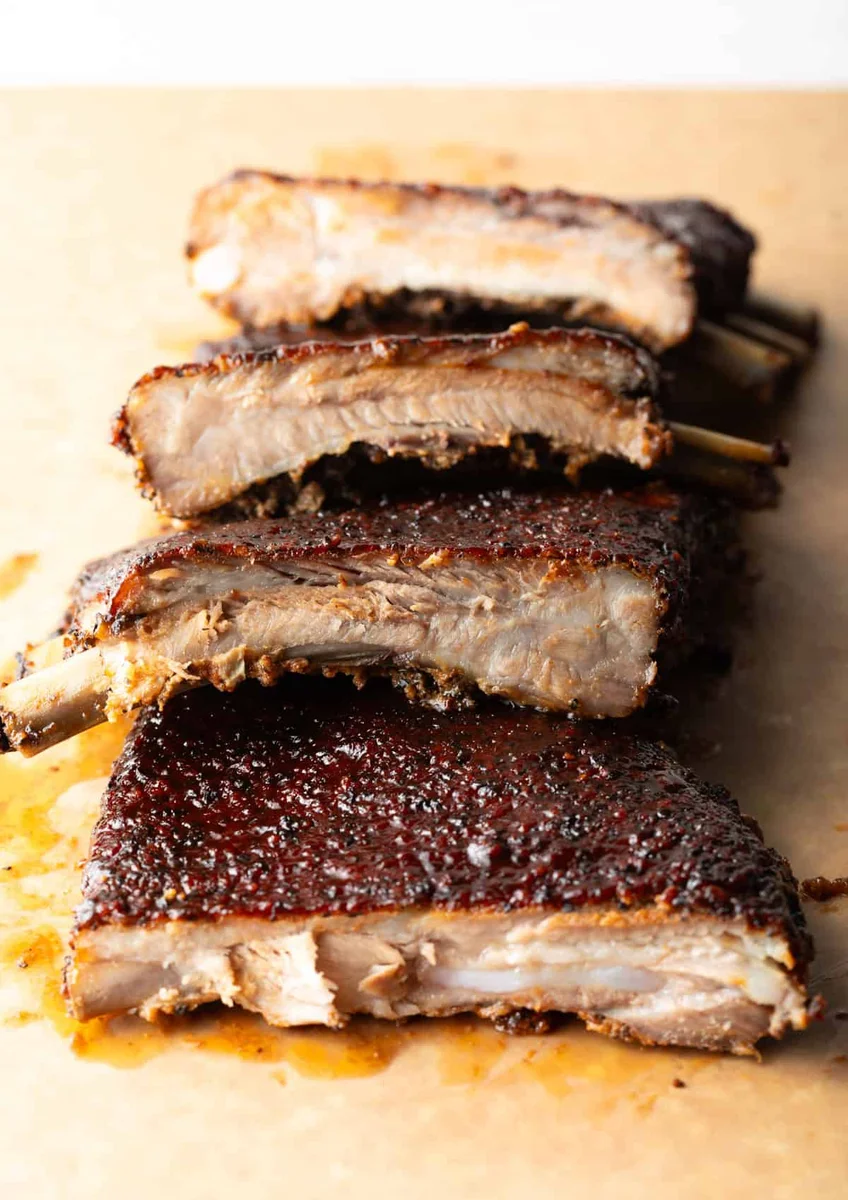
St Louis-style ribs are pork spare ribs cooked until tender, then finished with barbecue sauce for a sticky, browned coating. This recipe offers both oven and grill methods, so you can make them with whichever cooking setup you have.
Ingredients
- 1 rack (3–4 lb; 1.36–1.81 kg)St Louis-style pork ribs (spare ribs)
- 2 tablespoons (30 ml)Dijon mustard
- 2 tablespoons (30 ml)pork rub seasoning
- 1 cup (240 ml)barbecue sauce
Instructions
- 1
Remove the membrane
Turn the ribs over and find the membrane on the back. Try to grip a corner and peel it away in one piece. If it is difficult to remove, use a butter knife to loosen and scrape it from the edges of the rib bones.
- 2
Season the ribs
Rub the Dijon mustard over both sides of the rack, then sprinkle the pork seasoning over both sides. Stick to the stated amount, as the ribs can become too salty if you add more.
- 3
Bake the ribs
For the oven method, preheat the oven to 175°C (350°F). Place the ribs on a large rimmed baking sheet, cover it tightly with foil and press the foil around the edges. Bake for 2 hours.
- 4
Glaze and finish
Remove the ribs from the oven and raise the temperature to 220°C (425°F). Bake uncovered for 10 minutes. Brush on ½ cup of barbecue sauce and bake for another 10 minutes. Brush on the remaining ½ cup and return the ribs to the oven for 10 more minutes, uncovered, to form a browned exterior. Cut and serve.
- 5
Grill the ribs
For the grill method, preheat a gas grill to 165°C (325°F). Wrap the rack in aluminium foil and cook for 1 hour, 30 minutes per side.
- 6
Sauce and finish
Unwrap the ribs and place them top-side down on the grill for 10 minutes. Turn them over and brush with barbecue sauce; cook for another 10 minutes. Keep brushing and flipping the ribs every 10 minutes until they have cooked uncovered for 1 hour. Cook for at least 2 hours in total, or up to 2½ hours if they are not as tender as you like.
What are St Louis-style ribs?
St Louis-style ribs are pork spare ribs trimmed into a more uniform rack. The name refers to the cut, while the cooking approach here is a home-friendly American barbecue style.
Dijon mustard helps the rub cling to the meat, and a barbecue-sauce finish adds a sticky, savoury coating. The oven and grill options both start with covered cooking before the ribs are browned and sauced.
Nutrition and macros by portion
The nutrition label shows one serving as written: 255 calories, 2g protein, 59g carbs, 1g fat.
| Portion | Adjustment | kcal | Protein | Carbs | Fat |
|---|---|---|---|---|---|
| Lighter | Use less barbecue sauce | 179 kcal | 1g | 41g | 1g |
| This serving | As written | 255 kcal | 2g | 59g | 1g |
| Hungry | Serve a larger portion | 383 kcal | 3g | 89g | 2g |
The supplied nutrition figures list 59 g of carbohydrate per serving, with the barbecue sauce likely contributing much of it; the ribs are the main source of protein and fat. Pair a portion with vegetables or salad to add freshness and balance the plate.
The ingredients that matter
Ribs: A rack of St Louis-style pork ribs is the centrepiece. Removing the membrane on the underside helps the seasoning reach the surface.
Seasoning: Dijon mustard and pork rub flavour the meat before cooking. Use the stated amount of rub, as the recipe cautions that extra seasoning may make the ribs too salty.
Sauce: The barbecue sauce goes on in two additions at the end of the oven method, or is brushed on during the uncovered grill finish. This timing keeps it from being exposed to the full long cooking period.
Removing the membrane
Find the thin membrane on the bone side of the rack and try to lift a corner with your fingers. If it will not come away easily, use a butter knife to loosen it along the edges of the bones.
Take care not to tear the meat while scraping. Removing the membrane is the first step, before adding the mustard and rub.
Covered cooking for tenderness
Oven method: The rack cooks tightly covered with foil at 175°C (350°F) for 2 hours. The foil should be pressed around the baking sheet's edges, as directed.
Grill method: The ribs are wrapped in foil and cooked over a gas grill set to 165°C (325°F). The method specifies 1 hour, 30 minutes per side, then an uncovered finishing stage; check tenderness and allow up to 2½ hours total if needed.
Building the browned coating
Oven finish: After the covered bake, the oven is raised to 220°C (425°F). The ribs bake uncovered first, then get brushed with sauce twice, with 10 minutes in the oven after each addition.
Grill finish: The rack is first grilled uncovered top-side down for 10 minutes, then turned and brushed with sauce. Continue brushing and flipping every 10 minutes during the uncovered hour.
Checking for doneness
The recipe uses tenderness as its cue for extending the grill method: cook for up to 2½ hours if the ribs are not as tender as you like. Keep the rack intact during cooking and cut it into portions when ready to serve.
The oven method gives fixed cooking times, ending with 30 minutes of uncovered baking after the initial 2-hour covered bake. Follow the stated temperature changes and sauce additions for that route.
What to serve with the ribs
Serve the ribs freshly cut, with any remaining barbecue sauce at the table. A crisp salad or steamed green vegetables make a fresh contrast to the rich, sauced pork.
For a more substantial barbecue-style plate, add a starchy side such as potatoes or corn. Keep extra sauce separate so everyone can choose how much to use.
Recipe notes & tips
- Remove the membrane before applying the mustard and rub.
- Rub the mustard over both sides so the seasoning can cling to the rack.
- Keep to the specified amount of pork rub to avoid over-seasoning.
- Seal the foil tightly around the baking sheet for the oven method.
- Brush on the barbecue sauce during the finishing stage rather than before the long covered cook.
- Cut the rack into portions just before serving.
Variations
- Choose your cooking method: use the oven or gas grill according to the recipe.
- Change the sauce: use your preferred barbecue sauce in place of the one you usually buy.
- Serve extra sauce: offer additional barbecue sauce at the table for anyone who wants more.
- Add a fresh side: serve with a crisp salad or green vegetables alongside the ribs.
Common mistakes to avoid
- Leaving the membrane on: turn the rack over and remove it before seasoning.
- Adding extra rub: stick to the listed 2 tablespoons to avoid making the ribs too salty.
- Loose foil: press the foil tightly around the baking sheet edges for the oven method.
- Saucing too early: follow the method and add the barbecue sauce during the finishing stage.
- Skipping the grill turns: brush and flip the ribs every 10 minutes during the uncovered finish.
How to store
Refrigerate leftover ribs in a covered container and eat within 3–4 days. Reheat until hot throughout in a covered ovenproof dish, adding a little barbecue sauce if the surface seems dry.
Frequently asked questions
Can I make these ribs in the oven instead of on a grill?
Yes. The recipe includes an oven method: bake the foil-covered ribs at 175°C (350°F) for 2 hours, then finish them uncovered at 220°C (425°F) with the barbecue sauce.
Do I need to remove the membrane?
The recipe directs you to remove it from the back of the rack. Try peeling up a corner, or loosen it with a butter knife if it is difficult to grip.
When should I add the barbecue sauce?
For the oven method, add it after the ribs have had 10 minutes uncovered at 220°C (425°F), then brush on the two half-cup portions with 10 minutes of baking after each. On the grill, brush it on during the uncovered finishing stage.
How long do the ribs take on the grill?
The method calls for at least 2 hours total and up to 2½ hours if the ribs are not tender enough. It also specifies cooking the foil-wrapped rack for 1 hour, 30 minutes per side before the uncovered finish.
Can I use another type of barbecue sauce?
Yes. The ingredient list calls for barbecue sauce without specifying a particular style, so use the variety you prefer.
How should I reheat leftover ribs?
Reheat them covered in an ovenproof dish until hot throughout. A little extra barbecue sauce can help keep the surface from drying out.
Cook it from the original
This recipe comes from aspicyperspective.com. Their page has the author’s own photos, notes and tips — the best place to cook it from.
Open the recipe on aspicyperspective.com