
Cacio e Pepe Recipe
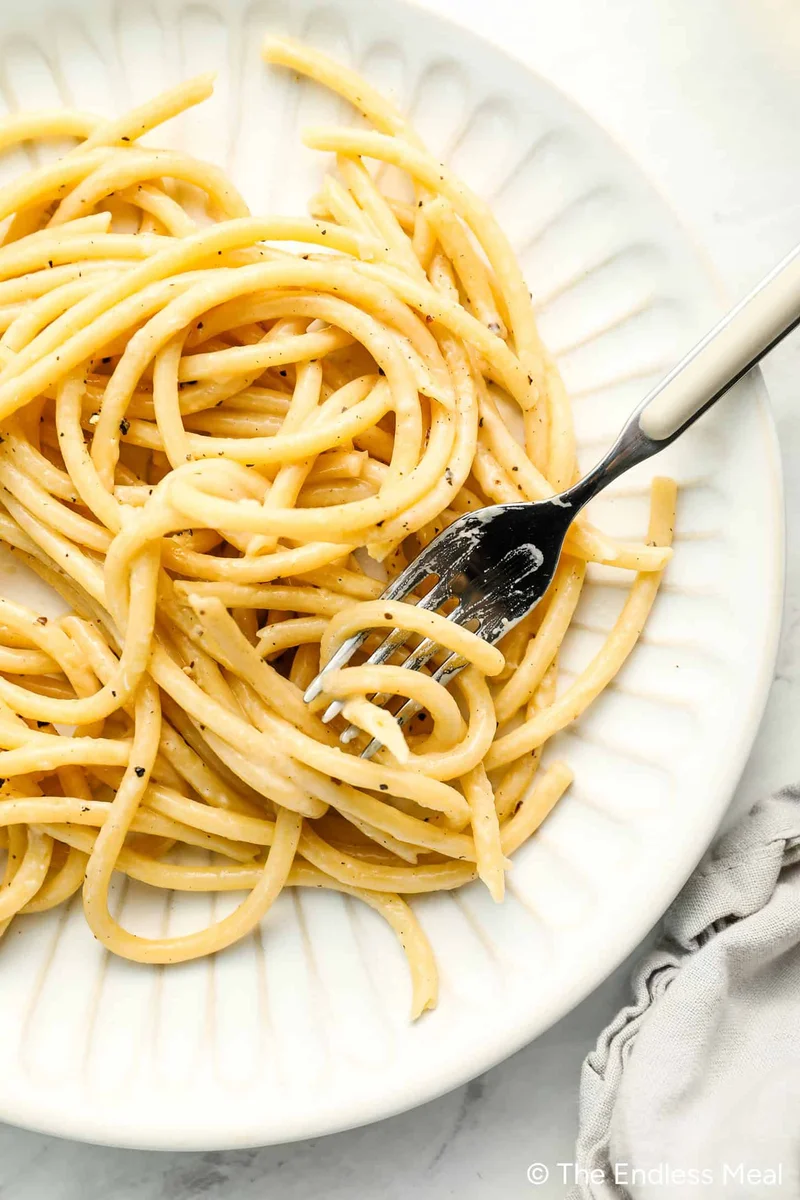
Cacio e pepe is a Roman pasta dish built around pecorino Romano and black pepper. This 20-minute version finishes the pasta in the pan, then uses a cheese paste and pasta water for a creamy coating.
Ingredients
- 227 g (8 oz)bucatini (or thick spaghetti)
- 15 ml (1 tablespoon)coarsely ground black pepper
- 227 g (8 oz; about 2 cups)finely grated pecorino Romano
Instructions
- 1
Cook the pasta
Bring a medium-sized pot of well-salted water to the boil over high heat. Add the pasta and cook it for 3 minutes less than the time stated on the packet.
- 2
Toast the pepper
While the pasta cooks, toast the pepper in a medium-sized pan over medium heat for 1 minute, until fragrant. Take the pan off the heat.
- 3
Make the cheese paste
Put the pecorino Romano in a small bowl and pour over a little pasta cooking water. Mix until it forms a paste.
- 4
Finish in the pan
Use tongs to transfer the pasta to the pan with the toasted pepper. Add 120 ml (½ cup) pasta cooking water and return the pan to medium heat. Cook, stirring often and adding a little more pasta water if needed, until the pasta is al dente or reaches your preferred doneness.
- 5
Toss with cheese
Take the pan off the heat and let the pasta cool slightly. Add the pecorino paste and toss with tongs, adding a little more pasta water if needed. Keep mixing patiently; it may take a couple of minutes for the cheese to coat the pasta.
- 6
Serve the pasta
Serve with a little extra pecorino Romano and black pepper scattered over the top.
What is cacio e pepe?
Cacio e pepe means cheese and pepper, the defining flavours of a classic Roman pasta dish. Its short ingredient list leaves little room to hide, so the pasta water and the way the cheese is added matter.
This version uses bucatini or thick spaghetti and makes a paste from finely grated pecorino. Finishing the pasta in the pepper pan helps bring the seasoning together before the cheese goes in.
Nutrition and macros by portion
The nutrition label shows one serving as written: 430 calories, 25g protein, 44g carbs, 16g fat.
| Portion | Adjustment | kcal | Protein | Carbs | Fat |
|---|---|---|---|---|---|
| Lighter | Smaller pasta portion | 301 kcal | 18g | 31g | 11g |
| This serving | As written | 430 kcal | 25g | 44g | 16g |
| Hungry | Larger pasta portion | 645 kcal | 38g | 66g | 24g |
The pasta provides most of the carbohydrates, while pecorino contributes much of the protein and fat. Pair a serving with vegetables or salad for a more balanced plate.
Choose the cheese and pasta
Pecorino Romano: Use it finely grated so it mixes into a smooth paste more readily. A coarse grate is more likely to leave clumps.
Bucatini: Its hollow centre and substantial shape work well with the creamy coating. Thick spaghetti is the suggested alternative.
Build the sauce with pasta water
Starchy water: Reserve the cooking water as you need it; it loosens the cheese paste and helps it coat the pasta. Add it gradually rather than pouring in more than the pan needs.
Cheese paste: Combining the pecorino with a little water before tossing gives you a head start on an even sauce.
Watch the heat
Toasted pepper: A minute in a medium pan is enough to make it fragrant. Take the pan off the heat after toasting, then return it to the hob when the pasta is ready.
Cool slightly: Let the pasta lose a little heat before adding the cheese paste. This is a key part of the method for a creamy result.
Check the pasta's texture
Early draining: The pasta starts in the pot for 3 minutes less than the packet time, then finishes cooking in the pepper pan. This lets you judge its doneness while it absorbs some cooking water.
Al dente: Taste a strand as it cooks in the pan. Stop when it has a slight bite, or continue to your preferred doneness, adding small splashes of water if the pan looks dry.
Serve it straight away
Cacio e pepe is best served as soon as it is tossed, while the sauce is smooth and clings to the pasta. Finish with the recipe's extra pecorino and black pepper.
For a simple meal, serve it alongside a crisp green salad or lightly cooked vegetables. Keep additions separate so the pasta's pepper and cheese remain the focus.
Recipe notes & tips
- Grate the pecorino finely so it is easier to mix into a smooth paste.
- Save some pasta water before draining or transferring the pasta.
- Toast the pepper only until fragrant; remove the pan from the heat afterwards.
- Add pasta water in small amounts when finishing the pasta in the pan.
- Let the pasta cool slightly before tossing in the pecorino paste.
- Keep tossing patiently until the cheese coats the strands.
Variations
- Use spaghetti: Swap in thick spaghetti if you do not have bucatini.
- Adjust the pepper: Use a little less or more coarsely ground pepper to suit your taste.
- Add extra pecorino: Finish with more finely grated cheese at the table.
- Make it milder: Use less black pepper while keeping the same method.
- Change the pasta shape: Try another substantial pasta shape that holds the sauce.
Common mistakes to avoid
- Adding cheese to very hot pasta: Let the pasta cool slightly first to help the cheese mix in smoothly.
- Using coarsely grated cheese: Finely grate the pecorino so it forms a more even paste.
- Adding too much water at once: Pour in small amounts so the sauce does not become too loose.
- Skipping the pan finish: Cook the pasta in the pepper pan until it reaches your preferred doneness.
- Stopping the toss too soon: Keep mixing for a couple of minutes so the paste coats the pasta.
How to store
Refrigerate leftovers in a sealed container and eat within 2 days. Reheat gently in a pan with a small splash of water, stirring until warmed through; the sauce may not be as creamy as when freshly made.
Frequently asked questions
Can I use spaghetti instead of bucatini?
Yes. The recipe gives thick spaghetti as an alternative to bucatini.
Why cook the pasta for less time in the pot?
It finishes cooking in the pan with the pepper and pasta water, so the initial cooking time is 3 minutes shorter than the packet directions.
How much pasta water should I add?
Add 120 ml (½ cup) when the pasta goes into the pan, then add small amounts as needed while it cooks and when you toss in the cheese paste.
Why should the pasta cool slightly before adding the cheese?
The method calls for a brief pause before adding the pecorino paste to help create a creamy coating.
Can I make cacio e pepe ahead?
It is best made just before serving, as the sauce is creamiest fresh. Leftovers can be refrigerated and gently reheated with a splash of water.
What does al dente mean here?
It means the pasta is cooked through but still has a slight bite. Taste it as it finishes in the pan and continue cooking if you prefer it softer.
Cook it from the original
This recipe comes from theendlessmeal.com. Their page has the author’s own photos, notes and tips — the best place to cook it from.
Open the recipe on theendlessmeal.com