
Egg Curry with Peas and Potatoes
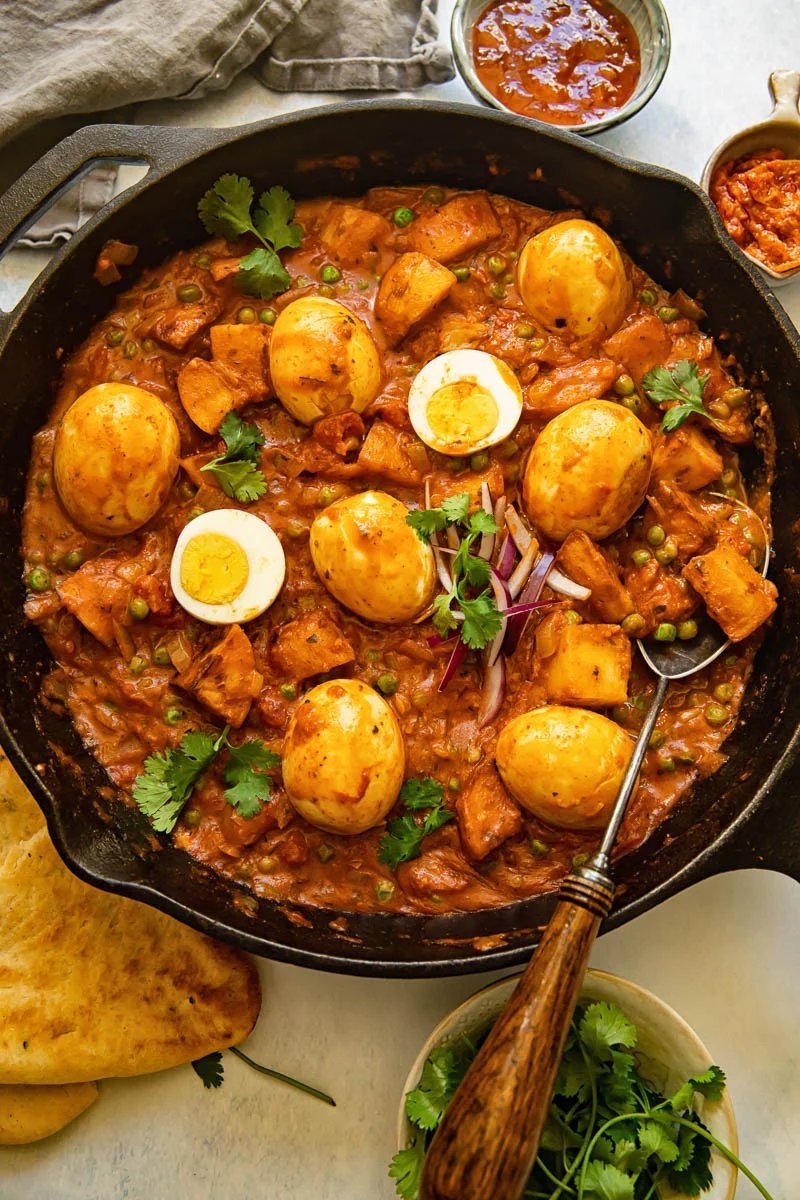
This Indian-style egg curry pairs hard-boiled eggs and potatoes with a gently spiced tomato and coconut sauce. It makes a warming one-pot meal, with peas adding colour and a little sweetness.
Ingredients
- 8eggs
- 15 ml (1 tbsp)vegetable oil
- 2potatoes
- 1onion
- 15 ml (1 tbsp), or 2 clovesgarlic paste, or garlic
- 15 ml (1 tbsp)grated ginger
- 45 ml (3 tbsp)curry paste (the recipe uses tikka masala)
- 200 g (7 oz)canned chopped tomatoes
- 250 ml (1 cup)coconut milk
- 150 g (1/2 cup)frozen peas
- For garnishfresh coriander
Instructions
- 1
Boil the eggs
Cook the eggs in a large pot for 10 minutes. Plunge them into cold water and leave to cool, then peel.
- 2
Brown the potatoes
Peel and cube the potatoes. Heat the vegetable oil and brown them until golden on the outside but not fully cooked, then transfer to a separate plate.
- 3
Make the curry
Add the chopped onion to the pot and sauté over medium heat for 5–7 minutes. Stir in the garlic and ginger and cook for 30 seconds more, then add the curry paste and stir-fry for a few seconds. Add the tomatoes and simmer for 5 minutes. Pour in the coconut milk and bring to the boil, then reduce the heat and simmer for 10 minutes. Add the eggs, potatoes and peas, with a splash of water if the sauce is already thick. Simmer for 10 minutes, until the potatoes are tender but still hold their shape.
- 4
Garnish and serve
Scatter fresh coriander over the curry. Serve with rice, naan and mango chutney or a spicy pickle.
What is egg curry?
Egg curry is a South Asian-style dish of cooked eggs served in a spiced sauce; recipes vary widely by region and household. This version combines curry paste with tomatoes and coconut milk for a fragrant, gently rich sauce.
Potatoes make it more substantial, while peas bring a sweet, fresh note. The eggs are added near the end so they warm through in the sauce without needing to cook from raw.
Nutrition and macros by portion
The nutrition label shows one serving as written: 253 calories, 11g protein, 20g carbs, 15g fat.
| Portion | Adjustment | kcal | Protein | Carbs | Fat |
|---|---|---|---|---|---|
| Lighter | Use less coconut milk | 177 kcal | 8g | 14g | 11g |
| This serving | As written | 253 kcal | 11g | 20g | 15g |
| Hungry | Add extra potatoes | 380 kcal | 17g | 30g | 23g |
The potatoes, peas and tomatoes provide most of the carbohydrates, while the eggs contribute protein and the oil and coconut milk account for much of the fat. Serve with a generous helping of vegetables alongside, or choose a moderate portion of rice or naan to balance the plate.
Choosing the curry paste
Curry paste: the recipe uses tikka masala paste, which gives the sauce its seasoning and aroma. Paste brands differ in salt and heat, so taste the finished sauce before serving.
Coconut milk: it softens the tomato's acidity and helps make the sauce creamy. Stir the tin or carton before measuring so the thicker and thinner parts are well combined.
Brown the potatoes first
Potato cubes: browning them in the oil gives their outsides colour, but they should remain undercooked at this stage. They finish simmering in the sauce, where they take on its flavour.
Pan space: cook in batches if the potatoes cannot sit in a single layer. Crowding makes them steam rather than brown.
Build the sauce in stages
Aromatics: give the onion its full 5–7 minutes over medium heat so it softens before the garlic and ginger go in. Their brief 30-second cook helps them release their fragrance without lingering in the hot pan.
Tomatoes and paste: stir-fry the curry paste only for a few seconds, then add the tomatoes and simmer for 5 minutes. This lets the sauce begin to come together before the coconut milk is added.
Check for doneness
Potatoes: simmer the assembled curry for 10 minutes and test a cube with a knife or fork. It should be tender through the centre but not breaking apart.
Sauce: if it becomes thick before the potatoes are ready, add a splash of water as directed. Keep the simmer gentle rather than letting the sauce boil hard.
Serve it with
Rice or naan: either is suggested with the curry and helps make a complete meal. Choose one or offer both at the table.
Chutney or pickle: mango chutney adds sweetness, while a spicy pickle gives a sharper, hotter contrast. Finish with coriander just before serving for a fresh herbal note.
Recipe notes & tips
- Cut the potatoes into similarly sized cubes so they cook at the same rate.
- Have the eggs peeled and the vegetables prepared before starting the sauce.
- Use medium heat for the onion and lower the heat once the coconut milk comes to the boil.
- Add water a little at a time if the sauce thickens before the potatoes are tender.
- Taste the curry paste before cooking so you know how spicy the finished dish may be.
Variations
- Adjust the heat: use a milder or hotter curry paste to suit your preference.
- Add spinach: stir in a handful near the end and cook until wilted.
- Use fresh peas: add them when you add the potatoes and eggs, allowing them to cook until tender.
- Change the herbs: finish with chopped mint if you do not have coriander.
- Make it dairy-free: check that the curry paste contains no dairy; the listed coconut milk is already dairy-free.
Common mistakes to avoid
- Overcooking the eggs: boil them for the stated 10 minutes, then cool them promptly in cold water.
- Crowding the potatoes: brown them in batches so they colour rather than steam.
- Burning the aromatics: add the garlic and ginger after the onion softens and cook them for just 30 seconds.
- Frying the curry paste for too long: stir it for only a few seconds before adding the tomatoes.
- Letting the sauce get too thick: add a splash of water before the final simmer if needed.
- Cooking the potatoes until they collapse: check them after 10 minutes in the sauce and stop when just tender.
How to store
Cool leftovers promptly and refrigerate in a covered container for up to 3 days. Reheat gently in a saucepan until piping hot, adding a little water if the sauce has thickened; avoid repeated reheating.
Frequently asked questions
Can I make this curry ahead?
Yes. You can make it ahead and refrigerate it in a covered container, then reheat gently until piping hot. The potatoes may soften further as they stand.
How can I tell when the potatoes are done?
A knife or fork should go through a cube easily, but the cube should still hold its shape. Begin checking at the end of the 10-minute simmer.
Can I use another curry paste?
Yes. The recipe specifies tikka masala paste, but another curry paste can be used; the flavour and heat will change. Check its seasoning before adding extra salt.
What should I serve with egg curry?
Serve it with rice or naan, as suggested in the recipe. Mango chutney or a spicy pickle makes a good accompaniment.
Can I use fresh peas instead of frozen?
Yes. Add fresh peas with the eggs and potatoes, then simmer until the peas and potatoes are tender.
Cook it from the original
This recipe comes from vikalinka.com. Their page has the author’s own photos, notes and tips — the best place to cook it from.
Open the recipe on vikalinka.com