
Pan Seared Steak
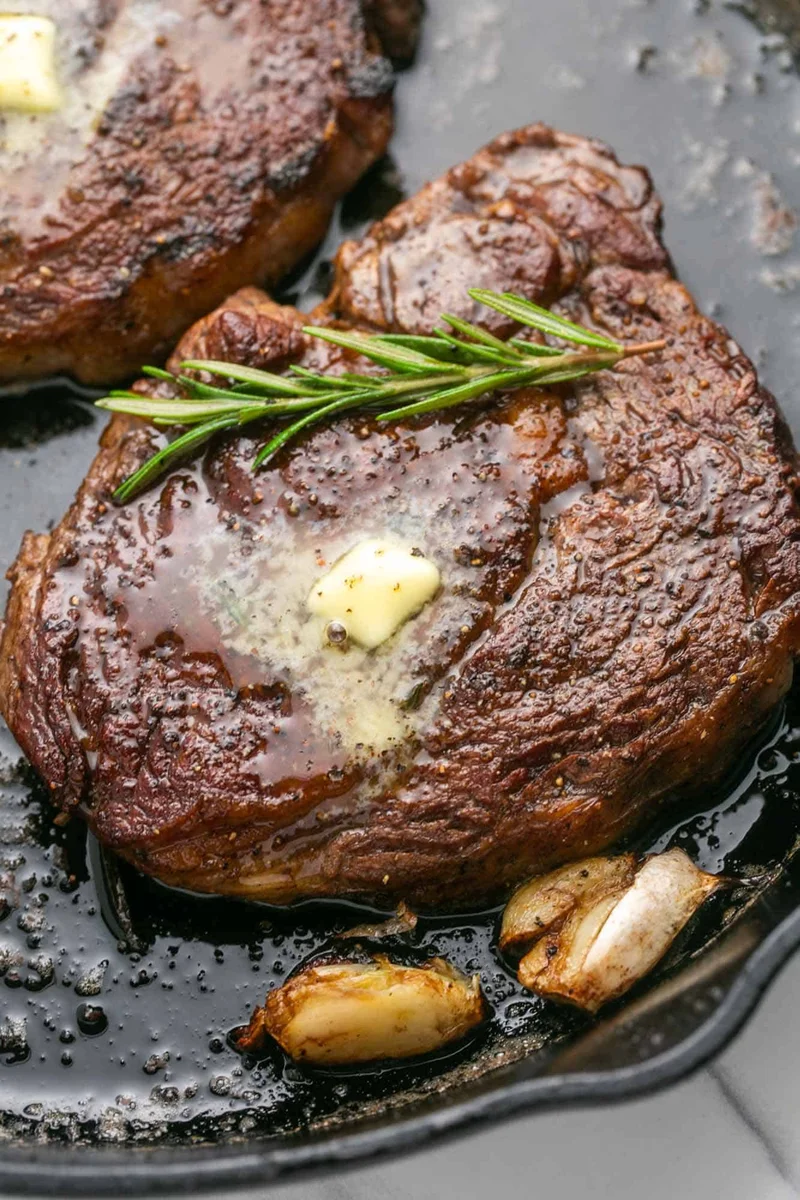
Pan-seared steak gets a deeply browned crust and a buttery finish infused with garlic, rosemary and thyme. It cooks quickly in one pan, making it a practical choice for a satisfying meal without a long preparation time.
Ingredients
- 2 steaks, 454 g (1 lb) each, about 3.2–3.8 cm (1¼–1½ in) thickribeye, strip, sirloin or T-bone steaks
- 5 ml (1 teaspoon)kosher salt
- 3.75 ml (¾ teaspoon)ground black pepper
- 15 ml (1 tablespoon)vegetable oil or another high-smoke-point oil
- 57 g (4 tablespoons)unsalted butter
- 4 clovesgarlic, lightly smashed and unpeeled
- 2 sprigsrosemary
- 2 sprigsthyme
Instructions
- 1
Season the steaks
Pat the steaks dry with paper towels, then season them generously on all sides with the salt and pepper. These thick cuts need a good coating of seasoning.
- 2
Sear the first side
Heat a heavy-bottomed pan over medium-high heat. Add the oil, and once it is shimmering, add the steaks and cook for 3 minutes to form a well-browned crust.
- 3
Baste and finish cooking
Lower the heat to medium and turn the steaks with kitchen tongs. Cook for 30 seconds, then add the butter, garlic and herbs. Spoon the melted butter over the steaks for 2 minutes in total, checking with a thermometer for your preferred temperature; remember that the temperature will rise by 5–10 degrees as the meat rests. Use the tongs to sear the sides too, helping to render some of the fat.
- 4
Rest and slice
Take the steaks out of the pan and rest them loosely covered with foil for 5–8 minutes. If serving straight away, slice against the grain; avoid slicing too thinly unless using the meat in a salad.
What is pan-seared steak?
Pan-seared steak is cooked over high heat in a hot pan so its outside browns while the inside cooks to the preferred doneness. Steak cooked this way is a familiar technique across many cuisines rather than a dish with one specific place of origin.
This version builds flavour in the same pan: garlic and herbs infuse the butter, which is spooned over the meat as it cooks. A short rest helps the steak settle before slicing.
Nutrition and macros by portion
The nutrition label shows one serving as written: 341 calories, 23g protein, 1g carbs, 27g fat.
| Portion | Adjustment | kcal | Protein | Carbs | Fat |
|---|---|---|---|---|---|
| Lighter | Use less butter | 239 kcal | 16g | 1g | 19g |
| This serving | As written | 341 kcal | 23g | 1g | 27g |
| Hungry | Add a larger steak | 512 kcal | 35g | 2g | 41g |
The steak supplies most of the protein and fat, while the butter and oil contribute additional fat; the recipe’s listed carbohydrate amount is very low. Pair a serving with vegetables and a suitable starch, such as potatoes, to make the plate more rounded.
Choose a steak that suits the pan
Cut: Ribeye, strip, sirloin and T-bone are all listed options, and the recipe calls for steaks about 3.2–3.8 cm thick. Choose two steaks of similar thickness so they cook at a similar pace.
Dry surface: Patting the meat dry before seasoning helps the surface brown rather than steam in the pan. Season all sides, including the edges.
Build a good crust
Hot oil: Wait until the oil is shimmering before adding the steaks. That cue indicates the pan is ready for the initial sear.
Hands off: Leave the steaks in place for the full 3 minutes on the first side to give the crust time to form. Use a heavy-bottomed pan to help maintain steady heat.
Baste without losing track of time
Butter and aromatics: Add the butter, lightly smashed garlic and herb sprigs after turning the steaks and cooking them for 30 seconds. Spoon the melted butter over the meat for the specified 2 minutes in total.
Temperature: Check the centre with a thermometer and account for a 5–10-degree rise during resting. The recipe does not specify a target doneness temperature, so use the target appropriate to your preference.
Check the finish
Edges: Hold the steaks with tongs and briefly sear their sides to render some fat, as directed. Keep the steaks moving carefully so the edges make contact with the pan.
Rest: Leave the steaks loosely tented with foil for 5–8 minutes after cooking. This pause also gives you time to prepare the rest of the meal.
Slice and serve
Against the grain: Look for the direction of the muscle fibres and cut across them for serving. Keep the slices substantial rather than very thin, unless you are adding the steak to a salad.
Pairings: Serve with a green salad, cooked vegetables or potatoes for a fuller plate. Keep any pan juices alongside the steak for extra buttery flavour.
Recipe notes & tips
- Use steaks of similar thickness so they are easier to cook consistently.
- Dry the meat thoroughly before it goes into the pan.
- Wait for the oil to shimmer before adding the steaks.
- Use tongs to turn the steaks and sear their edges.
- Check the centre temperature with a thermometer and allow for the rise during resting.
- Slice only when you are ready to serve, as the recipe notes that cut steak loses heat quickly.
Variations
- Change the cut: Use ribeye, strip, sirloin or T-bone as listed, keeping the steaks about the same thickness.
- Adjust the herbs: Use the rosemary and thyme sprigs together as directed, or choose one of them for a simpler herb flavour.
- Add pepper at the end: Reserve a little of the ground pepper to season the sliced steak just before serving.
- Serve as a salad: Slice the rested steak more thinly and use it to top a salad, as suggested in the method.
- Pair with vegetables: Serve with cooked vegetables alongside to add colour and variety to the plate.
Common mistakes to avoid
- Wet steak: A damp surface can hinder browning; pat the steaks dry before seasoning.
- Oil not hot enough: Adding the meat too early can delay the sear; wait until the oil shimmers.
- Moving the steak too soon: The crust needs time to form; leave it for the full 3 minutes on the first side.
- Skipping the thermometer: Timing alone may not show the centre temperature; check it with a thermometer and allow for carry-over cooking.
- Cutting immediately: Slicing straight from the pan skips the resting period; rest loosely tented for 5–8 minutes.
How to store
Refrigerate leftover steak in a covered container and use within 3–4 days. Reheat gently in a pan over low heat until warmed through, or serve cold in a salad; avoid prolonged heating, which can make it tougher.
Frequently asked questions
How thick should the steaks be?
The recipe calls for steaks about 3.2–3.8 cm (1¼–1½ inches) thick. If using steaks of different thicknesses, check each one separately with a thermometer.
Can I use a different pan?
Use a heavy-bottomed pan if possible, as it helps hold heat during searing. Choose a pan large enough to give the steaks room rather than crowding them.
How do I know when the steak is done?
Check the centre with a thermometer and use the target temperature for your preferred doneness. The recipe notes that the temperature will rise by 5–10 degrees as the steak rests.
Why baste the steak with butter?
Spoon the melted butter over the steak during the final cooking stage so the meat is coated with butter infused with garlic and herbs.
Should I slice the steak before storing it?
For leftovers, it is practical to keep the steak whole or in larger pieces so it retains heat and texture better. Slice it against the grain when you are ready to serve.
Cook it from the original
This recipe comes from littlesunnykitchen.com. Their page has the author’s own photos, notes and tips — the best place to cook it from.
Open the recipe on littlesunnykitchen.com