
Scrambled Eggs with Cottage Cheese
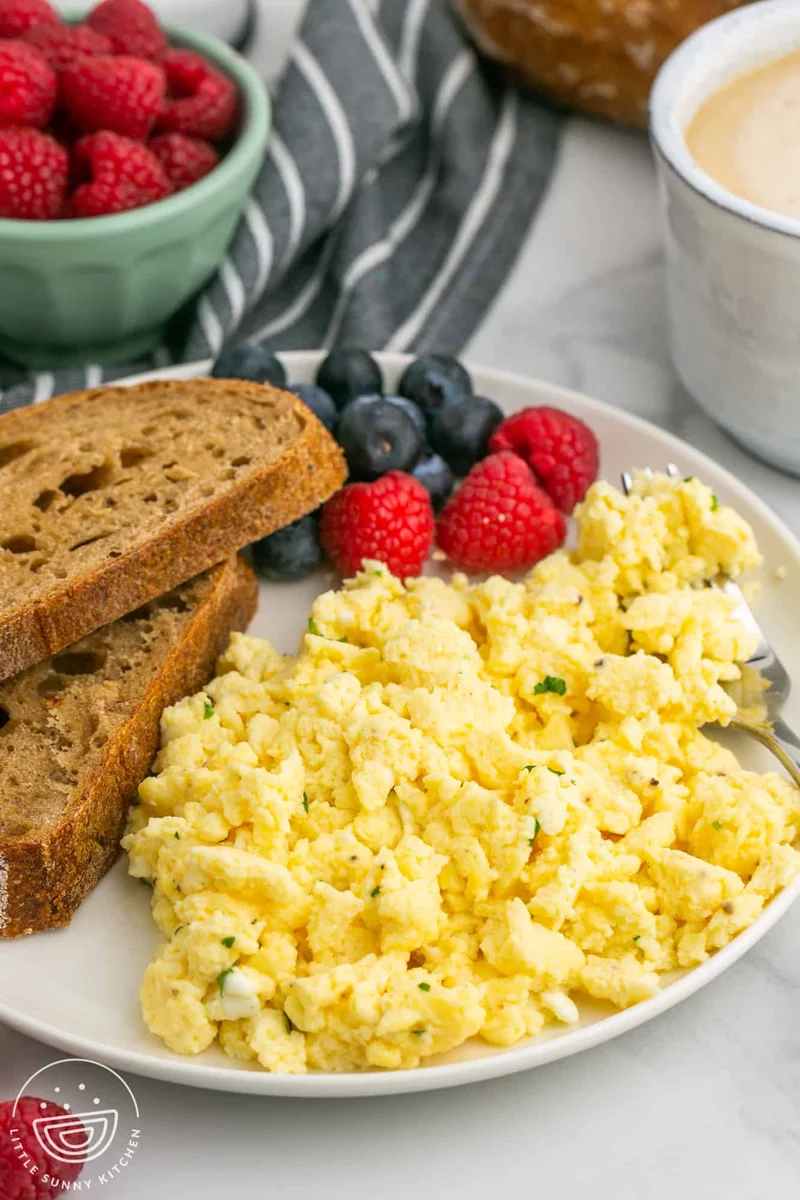
These scrambled eggs combine cottage cheese with softly cooked eggs for a quick, creamy breakfast with tender curds. They take just 9 minutes and work well on toast or alongside vegetables.
Ingredients
- 4 largeeggs
- 113 g (½ cup)cottage cheese
- 1.25 g (¼ teaspoon)salt
- 0.3 g (⅛ teaspoon)ground black pepper
- 14 g (1 tablespoon)unsalted butter
Instructions
- 1
Whisk the mixture
In a medium bowl, whisk the eggs with the cottage cheese, salt and pepper until combined. For a smoother mixture, blend the ingredients instead; leaving the curds intact is also fine.
- 2
Melt the butter
Set a medium non-stick frying pan over medium heat and melt the butter until foamy. Keep a plate close by so you can transfer the eggs as soon as they are ready.
- 3
Cook the eggs
Carefully pour the egg mixture into the pan. Gently stir and fold with a rubber spatula until large, fluffy curds form and the eggs are cooked through but still soft and creamy, then transfer to the plate and serve.
What are scrambled eggs with cottage cheese?
Scrambled eggs are a familiar breakfast in many places, and this simple variation stirs cottage cheese into the eggs before they hit the pan. It keeps the ingredient list short while adding a mild, creamy element.
The method relies on gentle stirring rather than fast, constant agitation. That helps the mixture gather into large, soft curds.
Nutrition and macros by portion
The nutrition label shows one serving as written: 228 calories, 17g protein, 2g carbs, 16g fat.
| Portion | Adjustment | kcal | Protein | Carbs | Fat |
|---|---|---|---|---|---|
| Lighter | Use less butter | 160 kcal | 12g | 1g | 11g |
| This serving | As written | 228 kcal | 17g | 2g | 16g |
| Hungry | Add toast and tomatoes | 342 kcal | 26g | 3g | 24g |
The eggs and cottage cheese provide most of the protein, while the eggs and butter contribute most of the fat. The small amount of carbohydrate comes mainly from the cottage cheese; serve with wholemeal toast or vegetables for a more substantial, balanced plate.
Why add cottage cheese?
Cottage cheese: whisk it with the eggs so it is distributed throughout the mixture. Small curds may remain, giving the finished eggs a slightly varied texture.
Eggs: they form the bulk of the dish and set as they cook. The recipe uses four large eggs for two servings.
Getting soft, fluffy curds
Gentle heat: let the butter melt over medium heat, then stir carefully as the eggs begin to set. Scraping and folding softly helps create larger curds instead of breaking them into tiny pieces.
Doneness: take the pan off the heat once the eggs are cooked through but still look soft and creamy. They will continue to firm slightly as you transfer them to the plate.
A smoother or curdled texture
Leave it textured: whisk the ingredients together by hand, as directed, for a mixture that may retain visible cottage cheese curds. This is the simplest option and needs no extra equipment.
Blend it smooth: use a blender before cooking if you prefer a more uniform mixture. Either way, pour it into the pan carefully and cook with the same gentle stirring.
Timing the finish
Prepare the plate: set it near the hob before you start cooking. Soft scrambled eggs can go from creamy to firm quickly, so having the plate ready makes serving easier.
Work by sight: the recipe gives a total time of 9 minutes, but use the texture as your main cue. Stop when the curds are set yet still tender.
What to serve alongside
Toast: serve the eggs with a slice of toast for a straightforward breakfast. The toast also gives you something to scoop up the soft curds.
Fresh sides: add tomatoes, sautéed mushrooms or leafy greens if you would like a fuller plate. Keep the eggs as the focus and serve them as soon as they are cooked.
Recipe notes & tips
- Measure out the ingredients and keep a serving plate beside the hob before cooking.
- Whisk thoroughly for an even mixture, or blend if you want the cottage cheese less noticeable.
- Use a non-stick frying pan to make stirring and serving easier.
- Stir gently with a rubber spatula to help form large curds.
- Serve promptly while the eggs are still soft and creamy.
Variations
- Add chives: snip them over the eggs just before serving.
- Add smoked paprika: whisk a small pinch into the egg mixture for a savoury note.
- Serve with greens: add a handful of wilted spinach alongside the eggs.
- Add tomatoes: serve with sliced fresh tomatoes for a bright side.
- Make it smoother: blend the eggs, cottage cheese, salt and pepper before cooking.
Common mistakes to avoid
- Cooking too long: the curds can turn firm; stop when the eggs are set but still soft.
- Stirring too forcefully: the curds may break up; fold and scrape gently with a rubber spatula.
- Starting before the plate is ready: the eggs may overcook while you fetch it; keep the plate by the hob.
- Using high heat: the mixture can set too quickly; cook over medium heat as directed.
- Expecting a completely smooth mixture: cottage cheese curds may remain; blend the mixture first if you prefer it smooth.
How to store
For the best texture, serve the eggs immediately. If needed, refrigerate leftovers in a covered container and use within 3 days; reheat gently in a pan over low heat, stirring until warmed through.
Frequently asked questions
Can I make the mixture smooth?
Yes. Blend the eggs, cottage cheese, salt and pepper before cooking for a more uniform mixture.
Why are my scrambled eggs watery?
Cottage cheese can release some moisture, and the eggs may also be undercooked. Cook gently until the mixture is set but still creamy, then transfer it straight to a plate.
How do I know when the eggs are done?
Look for large curds that are cooked through but still soft and creamy. Take them off the heat at that point, before they become firm.
Can I use salted butter?
Yes, but it will add salt to the dish. You can reduce or omit the measured salt to suit your preference.
Can I make this for one person?
Yes. Halve the ingredients for one serving and use a small non-stick pan; keep the same doneness cues.
Cook it from the original
This recipe comes from littlesunnykitchen.com. Their page has the author’s own photos, notes and tips — the best place to cook it from.
Open the recipe on littlesunnykitchen.com