
Roasted Butternut Squash
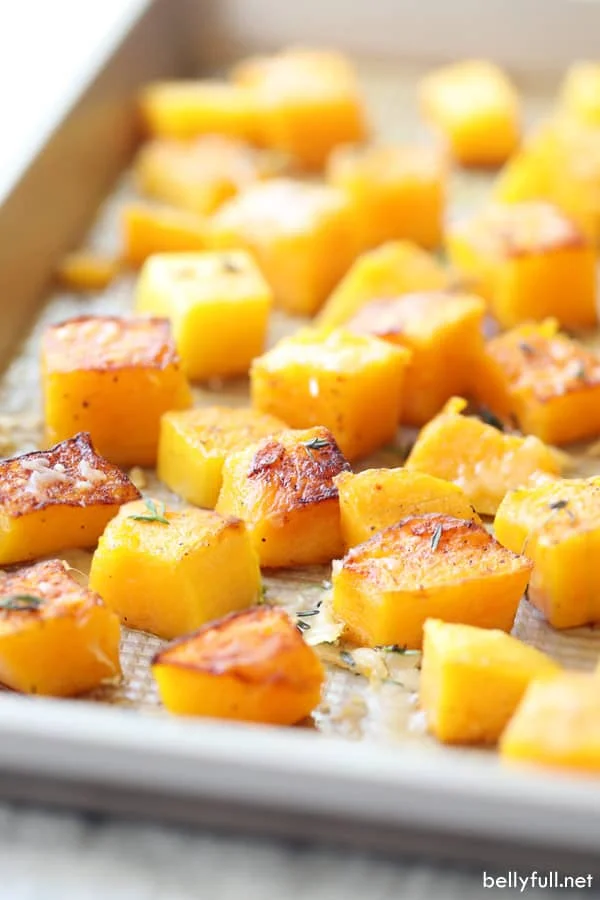
Roasted butternut squash is a simple American-style side dish, with tender, caramelised cubes finished with Parmesan and thyme. It is an easy choice when you want a savoury vegetable side with little hands-on preparation.
Ingredients
- 680 g (1 1/2 pounds)butternut squash, peeled, seeded and cut into 2 cm cubes
- 30 ml (2 tablespoons)extra-virgin olive oil
- 5 ml (1 teaspoon)kosher salt
- 1.25 ml (1/4 teaspoon)black pepper
- 4 sprigs (or 2.5 ml fresh thyme leaves, or 1.25 ml dried thyme)fresh thyme
- 33 g (1/3 cup)grated Parmesan cheese
Instructions
- 1
Heat the oven
Preheat the oven to 230°C (450°F). Coat a 38 x 25 cm (15 x 10-inch) roasting pan with non-stick cooking spray, then add the squash.
- 2
Season the squash
Drizzle the olive oil over the squash and add the salt and pepper. Toss until the pieces are coated.
- 3
Roast the squash
Put the pan in the oven and roast for 15 minutes, then gently toss the squash.
- 4
Add the finish
Stir in the Parmesan and thyme sprigs. Roast for 5 minutes more, or until the squash is tender.
- 5
Serve the squash
Serve and enjoy.
What is roasted butternut squash?
Butternut squash is a winter squash with sweet, firm orange flesh. Roasting is a familiar American way to prepare it, bringing out its sweetness while giving the edges a little colour.
This version keeps the seasoning straightforward: olive oil, salt and pepper form the base, while thyme and Parmesan add a savoury finish.
Nutrition and macros by portion
The nutrition label shows one serving as written: 176 calories, 5g protein, 21g carbs, 10g fat.
| Portion | Adjustment | kcal | Protein | Carbs | Fat |
|---|---|---|---|---|---|
| Lighter | Use less olive oil | 123 kcal | 4g | 15g | 7g |
| This serving | As written | 176 kcal | 5g | 21g | 10g |
| Hungry | Serve a larger portion | 264 kcal | 8g | 32g | 15g |
The squash supplies most of the carbohydrates, while olive oil and Parmesan contribute much of the fat; Parmesan also provides some protein. Pair a portion with a protein-rich main and a green vegetable for a more balanced plate.
Choosing and preparing the squash
Even cubes: Cut the peeled, seeded squash into pieces about 2 cm across so they cook at a similar rate. Smaller pieces may soften sooner, so check them before the full roasting time is up.
Thyme: The recipe uses sprigs, which are stirred in with the cheese near the end. Fresh thyme leaves or a smaller amount of dried thyme are also listed as alternatives.
Getting the roast right
Coating: Toss the squash thoroughly with the oil and seasonings before roasting, so the pieces are evenly covered.
Room to roast: Spread the squash across the roasting pan rather than piling it up. A crowded pan can trap moisture and make the pieces softer instead of allowing their surfaces to brown.
When it is tender
First check: After the initial 15 minutes, gently turn the squash so it cooks more evenly.
Final check: Roast with the Parmesan and thyme for 5 minutes more. The squash is ready when a fork slides into a cube without much resistance.
Using Parmesan and thyme
Parmesan: Stir it in for the final stretch of roasting, as directed, so it warms and clings to the squash without spending the entire cooking time in the hot oven.
Thyme: Sprigs give a gentle herbal flavour. If using leaves or dried thyme instead, follow the quantities given in the ingredient list.
What to serve alongside
This squash works alongside roast chicken, pork or a hearty grain dish. Its sweet, buttery flavour also pairs well with greens or a crisp salad.
For a more substantial plate, serve it with a protein-rich main and another vegetable, or spoon it over cooked grains.
Recipe notes & tips
- Cut the squash into evenly sized cubes to help them roast at the same pace.
- Use a large enough pan to spread the pieces out in a single layer.
- Toss gently after the first 15 minutes to turn the squash without breaking it up.
- Check for tenderness with a fork before taking the pan out of the oven.
- Add the Parmesan and thyme at the stage specified so they finish with the squash.
Variations
- Use thyme leaves: Substitute 2.5 ml fresh thyme leaves for the sprigs.
- Use dried thyme: Add 1.25 ml dried thyme in place of the fresh sprigs.
- Try another herb: Swap the thyme for rosemary for a different aromatic note.
- Add a little heat: Season with a pinch of chilli flakes along with the salt and pepper.
- Change the cheese: Finish with finely grated pecorino instead of Parmesan.
Common mistakes to avoid
- Uneven cubes: Pieces of different sizes cook at different rates; cut them to a similar size.
- Crowded pan: Piled-up squash can soften rather than roast; spread it across the pan.
- Skipping the toss: The squash may cook unevenly; gently turn it after 15 minutes.
- Adding cheese too early: Parmesan can overcook; stir it in for the final 5 minutes.
- Guessing doneness by colour alone: Test a cube with a fork to make sure the centre is tender.
How to store
Refrigerate leftovers in an airtight container for up to 3 days. Reheat in an oven at 180°C until hot, or warm in a frying pan; the squash will be softer after storing.
Frequently asked questions
Can I use pre-cut butternut squash?
Yes. Choose pieces close to 2 cm in size and check them for tenderness as they roast, since pre-cut pieces may vary.
Can I use dried thyme?
Yes. The recipe lists 1.25 ml (1/4 teaspoon) dried thyme as an alternative to the fresh sprigs.
How do I know when the squash is done?
After the additional 5 minutes with the Parmesan and thyme, test a cube with a fork. It should be tender in the centre.
Can I make this without Parmesan?
Yes. Leave it out for a dairy-free version, though the dish will lose some of its savoury, cheesy finish.
Can I prepare the squash ahead?
You can peel, seed and cube it ahead of time, then refrigerate it until ready to roast. Toss it with the oil and seasonings just before it goes into the oven.
Cook it from the original
This recipe comes from bellyfull.net. Their page has the author’s own photos, notes and tips — the best place to cook it from.
Open the recipe on bellyfull.net