
Pineapple Mango Salsa
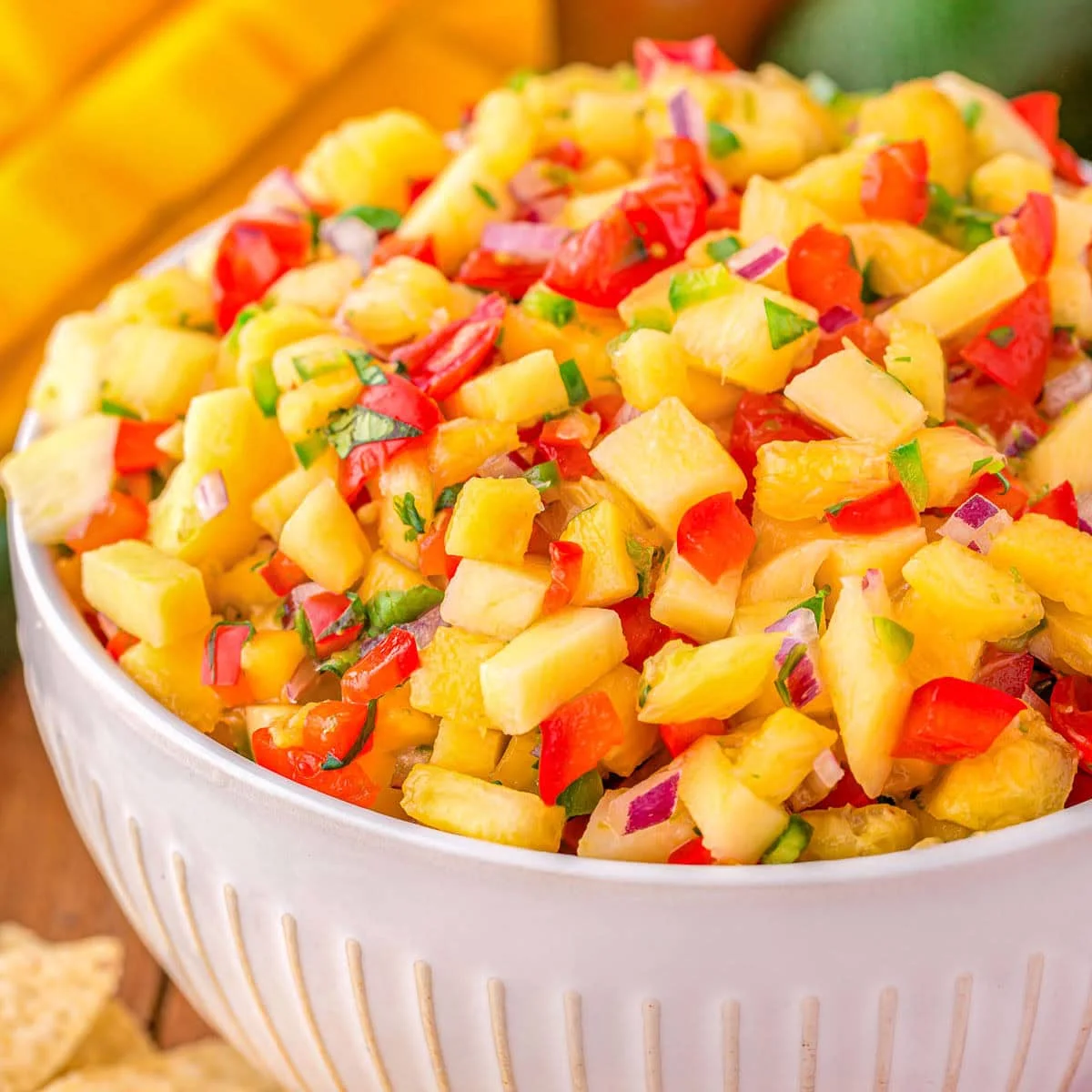
A bright, juicy fruit salsa combining pineapple and mango with crisp vegetables, fresh lime and a little jalapeño heat. Serve it chilled with tortilla chips or alongside grilled seafood or chicken.
Ingredients
- 330 g (2 cups)diced pineapple
- 250 g (1½ cups)diced mango
- 75 g (½ cup)finely diced red pepper
- 50 g (⅓ cup)finely diced red onion
- 50 g (⅓ cup)diced tomatoes (Roma, cherry, grape, etc.)
- 10 g (¼ cup)chopped fresh coriander
- 1jalapeño, deseeded and finely chopped
- 2 teaspoonslime zest
- 30 ml (2 tablespoons)lime juice
- 15 ml (1 tablespoon)honey
Instructions
- 1
Combine the fruit
Add the pineapple, mango, red pepper, red onion, tomatoes, coriander, jalapeño and lime zest to a large bowl. Toss gently to combine, then set aside.
- 2
Mix the dressing
In a small bowl, whisk the lime juice and honey together until combined.
- 3
Dress the salsa
Drizzle the lime and honey mixture over the salsa. Fold or toss gently until it is evenly distributed.
- 4
Chill until serving
Cover the salsa tightly with cling film and refrigerate until ready to serve.
- 5
Serve chilled
Serve cold with tortilla chips.
What is pineapple mango salsa?
Salsa is a broad term for a sauce or relish, and fresh versions often pair chopped ingredients with citrus and herbs. This fruity take draws on the familiar salsa combination of fresh produce, lime and chilli without claiming a specific regional origin.
Pineapple and mango bring sweetness and juice, while pepper, onion and tomato add savoury crunch. Honey softens the lime's sharpness, and jalapeño gives the mixture a gentle kick.
Nutrition and macros by portion
The nutrition label shows one serving as written: 55 calories, 1g protein, 14g carbs, 0g fat.
| Portion | Adjustment | kcal | Protein | Carbs | Fat |
|---|---|---|---|---|---|
| Lighter | Use less honey | 39 kcal | 1g | 10g | 0g |
| This serving | As written | 55 kcal | 1g | 14g | 0g |
| Hungry | Serve a larger portion | 83 kcal | 2g | 21g | 0g |
Most of the carbohydrates come from the pineapple, mango and honey; the fruit and vegetables also contribute a small amount of fibre. The recipe is very low in fat, with only a little protein, so pair a serving with grilled chicken, fish or beans for a more balanced plate.
Choose ripe fruit
Pineapple: choose fruit that smells fragrant and feels juicy, but is still firm enough to dice neatly.
Mango: use a ripe mango that gives slightly when pressed; very soft fruit can collapse when mixed.
Keep the pieces even
Evenly sized dice make each spoonful easier to scoop and help the fruit and vegetables distribute throughout the bowl. Cut the onion and jalapeño finely so their stronger flavours do not overwhelm the larger pieces.
Balance the dressing
Honey and lime juice are whisked together before being added, so the sweetener is spread through the salsa rather than clumping in one spot. Fold the dressing in gently to keep the softer mango pieces intact.
Adjust the heat
Jalapeño: removing the seeds keeps the chilli contribution milder, while leaving some in makes the salsa hotter. Handle the pepper carefully and wash your hands after chopping it.
Chill and serve
Refrigeration gives the salsa time to become cold and lets the lime dressing mingle with the fruit. Serve it with tortilla chips, or spoon it alongside grilled seafood or chicken for a fresh contrast.
Recipe notes & tips
- Dice the fruit and vegetables into similarly sized pieces for an easy-to-scoop salsa.
- Taste the jalapeño before adding it if you are unsure how hot it is.
- Use freshly grated lime zest for a fragrant citrus note.
- Fold rather than stir vigorously to help the mango keep its shape.
- Chill the salsa before serving, as directed, and keep it covered in the fridge.
Variations
- More heat: add some of the jalapeño seeds for a spicier salsa.
- Extra citrus: add a little more lime juice to sharpen the dressing.
- Milder onion: rinse the diced red onion under cold water and drain it before mixing.
- Herb swap: use fresh mint instead of coriander for a different aromatic note.
- Tomato choice: use halved cherry or grape tomatoes, or diced Roma tomatoes.
Common mistakes to avoid
- Overripe mango: it can turn mushy when tossed; choose fruit that still holds its shape.
- Large onion pieces: they can dominate a bite; dice the onion finely.
- Too much chilli: jalapeños vary in heat; start with less and add more to taste.
- Rough mixing: vigorous stirring can break up the fruit; fold the dressing in gently.
- Uncovered storage: the salsa can pick up fridge odours; cover it tightly before chilling.
How to store
Keep the salsa covered in an airtight container in the fridge and use it within 2–3 days. Stir gently before serving; freezing is not recommended, as the fruit and vegetables can lose their crisp texture.
Frequently asked questions
Can I make this salsa ahead?
Yes. Prepare it ahead, cover tightly and refrigerate until serving. For the freshest texture, avoid making it too far in advance.
How can I make it less spicy?
Use less jalapeño, and make sure it is deseeded and finely chopped. You can also leave it out.
What should I serve with pineapple mango salsa?
Serve it with tortilla chips, grilled seafood or chicken. It also works as a fresh topping for a savoury meal.
Can I use tinned pineapple?
Fresh pineapple is best for a crisp texture. If using tinned pineapple, drain it well before dicing and mixing.
Why is my salsa watery?
Ripe fruit and tomatoes naturally release juice, especially after chopping. Drain off excess liquid before serving if needed.
Cook it from the original
This recipe comes from momontimeout.com. Their page has the author’s own photos, notes and tips — the best place to cook it from.
Open the recipe on momontimeout.com