
Chocolate Cake
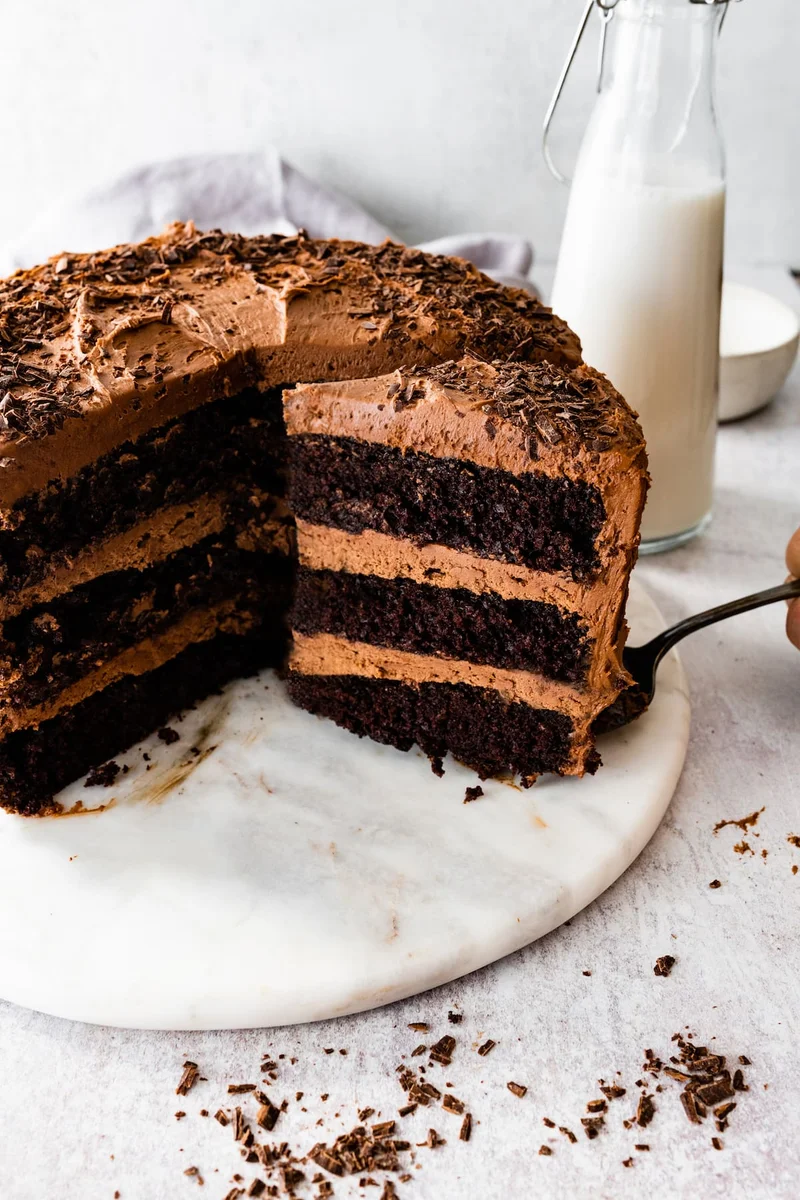
This American-style chocolate layer cake pairs soft, cocoa-rich sponge with a smooth chocolate buttercream. It makes a celebratory centrepiece for birthdays and other special occasions.
Ingredients
- 210 g (1¾ cups)plain flour
- 400 g (2 cups)granulated sugar
- 65 g (¾ cup), siftedunsweetened cocoa powder
- 2 teaspoonsbicarbonate of soda
- 1 teaspoonbaking powder
- 1 teaspoonkosher salt
- 1 teaspoon, optionalespresso powder
- 240 ml (1 cup), at room temperaturebuttermilk
- 120 ml (½ cup)rapeseed oil or vegetable oil
- 1 tablespoonpure vanilla extract
- 2 large, at room temperatureeggs
- 240 ml (1 cup), boilingwater
- 454 g (2 cups), at room temperatureunsalted butter
- 720–840 g (6–7 cups), siftedicing sugar
- 85 g (1 cup), siftedunsweetened cocoa powder
- 90–120 ml (6–8 tablespoons)double cream
- 2 teaspoonspure vanilla extract
- ¼ teaspoonkosher salt
- 115 g (⅔ cup), melted and slightly cooledsemi-sweet chocolate chips
- To decorate, optionalchocolate shavings, chocolate chips or sprinkles
Instructions
- 1
Prepare the pans
Heat the oven to 175°C (350°F). Grease three 20 cm (8-inch) round cake pans generously with non-stick cooking spray. Line them with baking parchment, spray them again and set aside.
- 2
Mix dry ingredients
In the bowl of a stand mixer, whisk together the flour, sugar, cocoa powder, bicarbonate of soda, baking powder, salt and espresso powder, if using.
- 3
Combine wet ingredients
In a medium bowl, whisk together the buttermilk, oil and vanilla extract.
- 4
Add eggs
With the mixer on low, gradually pour in the buttermilk mixture. Add the eggs one at a time, mixing until combined.
- 5
Finish the batter
Slowly add the boiling water and stir just until combined, pausing to scrape down the bowl. Mix briefly again; the batter will be thin.
- 6
Bake the layers
Divide the batter evenly between the prepared pans. Bake for 22–28 minutes, or until a toothpick inserted in the centre comes out clean. Remove the cakes from the oven and place the pans on a wire rack.
- 7
Cool the cakes
Leave the cakes in their pans for 30 minutes, then turn them out onto a wire rack and cool completely. The layers can be wrapped in plastic wrap and chilled in the fridge or freezer.
- 8
Beat the butter
To make the frosting, beat the butter in a stand mixer fitted with the paddle attachment until creamy and lighter in colour, about 3 minutes. Scrape down the bowl halfway through.
- 9
Add sugar and cocoa
With the mixer on low, add the icing sugar 2 cups at a time. Start with 6 cups and add more later if needed, then add the cocoa powder.
- 10
Finish the buttercream
Pour in 90 ml (6 tablespoons) of the double cream, the vanilla extract and salt. With the mixer on low, add the melted chocolate, then mix for 2–3 minutes until light and fluffy. If the frosting is too thin, gradually add more icing sugar; if too thick, add more cream a teaspoon at a time until it reaches the desired consistency.
- 11
Level the layers
Check that the cake layers are flat rather than domed. If needed, carefully trim the tops with a sharp serrated knife so the layers are as even as possible.
- 12
Stack and frost
Place the first layer, bottom side up, on a flat plate or cake stand. Spread buttercream evenly over the top with a knife or offset spatula. Add the second layer top side up and spread on more buttercream, then repeat with the third layer and frost the top and sides.
- 13
Decorate the cake
If desired, decorate with sprinkles, chocolate shavings or chocolate chips.
- 14
Cut and serve
Cut the cake into pieces with a sharp knife and serve.
What is chocolate layer cake?
Chocolate layer cake is a celebratory cake made from stacked rounds of chocolate sponge and a filling or frosting between the layers. This American-style version uses cocoa in the cake and chocolate buttercream around the outside.
Its appeal comes from the contrast between tender, moist sponge and a smooth, rich frosting. Three layers give each slice a clear balance of cake and buttercream.
Nutrition and macros by portion
The nutrition label shows one serving as written: 692 calories, 5g protein, 91g carbs, 37g fat.
| Portion | Adjustment | kcal | Protein | Carbs | Fat |
|---|---|---|---|---|---|
| Lighter | Use a smaller slice | 484 kcal | 4g | 64g | 26g |
| This serving | As written | 692 kcal | 5g | 91g | 37g |
| Hungry | Serve a larger slice | 1038 kcal | 8g | 137g | 56g |
The cake's carbohydrates come mainly from the flour, sugar and icing sugar; butter, oil and cream supply much of the fat, while eggs and buttermilk contribute some protein. Serve a slice with fresh berries for a little contrast and to balance the richness of the cake.
The ingredients that shape the sponge
Cocoa and espresso: Cocoa provides the chocolate flavour, while the optional espresso powder adds depth without turning the cake into a coffee cake. Sifting the cocoa helps it mix evenly into the dry ingredients.
Buttermilk and oil: Buttermilk brings tang and moisture, while oil keeps the crumb soft. Bring the buttermilk and eggs to room temperature so they combine more readily with the other ingredients.
Why the batter is thin
Boiling water: The hot water is added at the end and makes the batter loose. Stir only until it is combined, scraping down the bowl as directed; a thin batter is expected for this recipe.
Even layers: Divide the batter evenly among the three prepared pans so the layers bake at a similar rate. Greasing and lining the pans helps release the cakes after cooling.
Getting the buttercream right
Creamed butter: Beat the room-temperature butter until it looks creamy and lighter, scraping down the bowl halfway through. This gives the icing a smooth base before the dry ingredients go in.
Adjustable texture: Add the icing sugar gradually, then mix in the cocoa, cream, vanilla, salt and cooled melted chocolate. Add extra sugar if the frosting is too thin, or cream a teaspoon at a time if it is too thick.
Check the bake and cool fully
Doneness: Start checking within the stated 22–28 minute baking window. A toothpick inserted in the centre should come out clean.
Cooling: Keep the cakes in their pans for 30 minutes before turning them out, then let them cool completely. Warm layers can soften the buttercream, so wait before assembling.
Level and assemble the cake
Flat layers: Trim any rounded tops carefully with a serrated knife so the cake stacks evenly. Place the first layer bottom side up, then alternate cake and buttercream as directed.
Finishing: Use a knife or offset spatula to spread frosting across the top of each layer and over the sides. Chocolate shavings, chips or sprinkles make a simple finish.
How to serve it
Cut the cake with a sharp knife for neater slices, wiping the blade between cuts if the frosting builds up. Serve it as a dessert for a birthday or other celebration.
For a less rich plate, serve a slice with fresh berries. Coffee or tea also makes a straightforward accompaniment.
Recipe notes & tips
- Bring the buttermilk and eggs to room temperature before mixing.
- Sift the cocoa powder and icing sugar to help prevent lumps.
- Scrape down the mixing bowl when directed so the ingredients combine evenly.
- Let the melted chocolate cool slightly before adding it to the buttercream.
- Wait until the cake layers are completely cool before stacking and frosting.
- Level domed cake tops carefully with a sharp serrated knife.
Variations
- Skip the espresso: Leave it out for a straightforward cocoa flavour.
- Add a chocolate finish: Scatter chocolate shavings over the frosted cake.
- Use sprinkles: Decorate the top with sprinkles for a birthday-style finish.
- Top with chocolate chips: Press chocolate chips onto the frosting before serving.
Common mistakes to avoid
- Overmixing after adding water: Stir only until combined so you do not work the batter more than needed.
- Uneven layers: Divide the batter as evenly as possible among the three pans.
- Opening the oven too early: Check for doneness within the stated 22–28 minute window.
- Frosting warm cakes: Cool the layers completely before assembling.
- Adding all the sugar at once: Mix it in 2 cups at a time to keep the buttercream manageable.
- Forcing the frosting texture: Adjust a thin buttercream with more icing sugar, or a thick one with cream a teaspoon at a time.
How to store
Wrap the cooled cake layers in plastic wrap and chill them in the fridge or freezer, as directed in the recipe. Store assembled leftovers covered in the fridge; let a slice stand briefly at room temperature before serving so the buttercream softens.
Frequently asked questions
Can I leave out the espresso powder?
Yes. The espresso powder is optional, so you can omit it and make the cake without it.
Why is the cake batter so thin?
The recipe adds boiling water at the end, which makes the batter loose. This is expected; divide it between the prepared pans as directed.
How do I know when the cakes are baked?
Bake for 22–28 minutes and test the centre with a toothpick. It should come out clean.
Can I make the cake layers ahead?
Yes. Once cooled, the layers can be wrapped in plastic wrap and chilled in the fridge or freezer.
How can I fix buttercream that is too thick or too thin?
If it is too thick, add more double cream a teaspoon at a time. If it is too thin, gradually mix in a little more icing sugar.
Do I need to trim the cake layers?
Only if they have rounded tops. Trim any domes carefully with a serrated knife to help the layers stack evenly.
Cook it from the original
This recipe comes from twopeasandtheirpod.com. Their page has the author’s own photos, notes and tips — the best place to cook it from.
Open the recipe on twopeasandtheirpod.com