
Roasted Butternut Squash
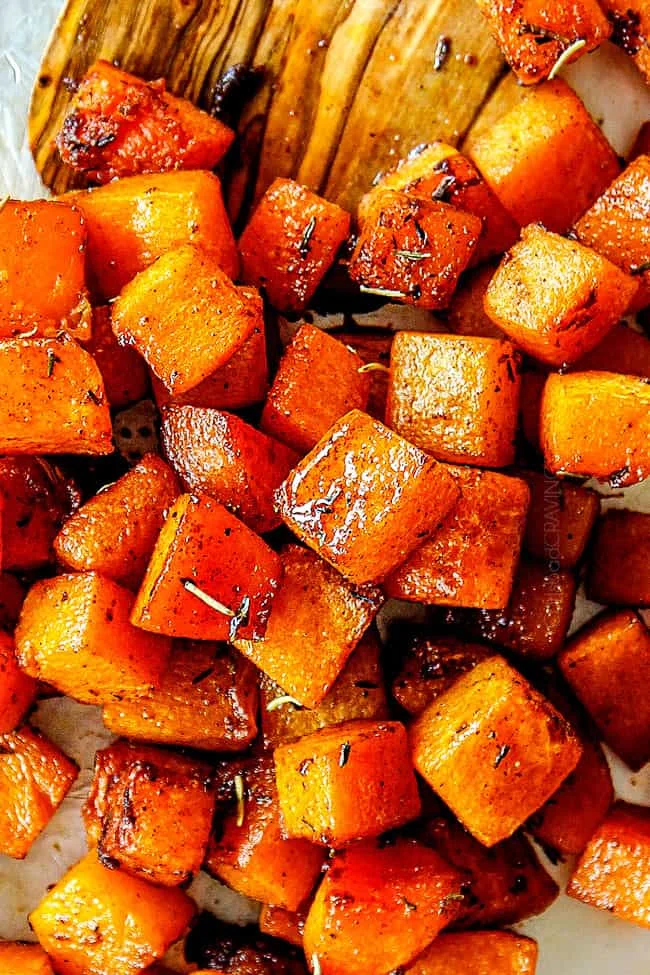
Roasted butternut squash is a simple one-pan side with tender centres and caramelised edges. A sweet, savoury coating of butter, maple syrup, herbs and spices makes it a versatile match for autumn and winter meals.
Ingredients
- 1 large squash, about 1.36 kg (3 lb), peeled and cut into 2.5 cm (1 in) cubesbutternut squash
- 30 ml (2 tablespoons), meltedbutter
- 15 ml (1 tablespoon)olive oil
- 15 ml (1 tablespoon)pure maple syrup
- 15 ml (1 tablespoon)brown sugar
- 5 ml (1 teaspoon)balsamic vinegar
- 3.75 ml (¾ teaspoon)salt
- 2.5 ml (½ teaspoon) eachground cinnamon, dried thyme, dried rosemary and garlic powder
- 1.25 ml (¼ teaspoon) eachpepper and paprika
- A pinchcayenne pepper
Instructions
- 1
Prepare the oven
Heat the oven to 200°C (400°F). Line a 38 × 51 cm (15 × 20 in) baking tray with foil and coat it with non-stick cooking spray. Add the squash.
- 2
Mix the coating
Melt the butter in a medium microwave-safe bowl. Add all the remaining ingredients and whisk them together. Pour about two-thirds of the mixture over the squash and toss until evenly coated.
- 3
Arrange the squash
Spread the cubes across the tray in a single layer, leaving space between them.
- 4
Roast until tender
Roast for 15 minutes, then stir the squash and spread it out evenly again. Roast for another 10–15 minutes, until fork-tender. If desired, grill for 1–2 minutes to brown the edges. Remove from the oven and toss with the remaining butter mixture, thinning it in the microwave if needed. Serve warm.
What is roasted butternut squash?
Butternut squash is a winter squash with sweet orange flesh that softens and deepens in flavour as it cooks. Roasting is a familiar American way to serve it as a side, letting the oven bring out its sweetness while browning the edges.
This version combines maple syrup and brown sugar with balsamic vinegar, herbs and warm spices. The tray method keeps the preparation straightforward and gives the cubes room to roast rather than steam.
Nutrition and macros by portion
The nutrition label shows one serving as written: 150 calories, 2g protein, 29g carbs, 6g fat.
| Portion | Adjustment | kcal | Protein | Carbs | Fat |
|---|---|---|---|---|---|
| Lighter | Use less butter and syrup | 105 kcal | 2g | 20g | 4g |
| This serving | As written | 150 kcal | 2g | 29g | 6g |
| Hungry | Serve a larger portion | 225 kcal | 3g | 44g | 9g |
Most of the carbohydrates come from the squash, maple syrup and brown sugar, while butter and olive oil provide most of the fat. The squash also contributes a little protein and fibre. Pair a portion with a protein-rich main and green vegetables for a more balanced plate.
The squash and the cut
Even cubes: Cut the squash into pieces roughly 2.5 cm (1 in) wide so they cook at a similar pace. Peeling it first gives the finished cubes a tender texture throughout.
Why leave space on the tray?
Room to brown: A single layer with space between pieces helps moisture escape and encourages caramelised edges. If the cubes are touching, they are more likely to soften without browning as much.
Balancing the coating
Sweet and savoury: Maple syrup and brown sugar bring sweetness, while balsamic vinegar adds a sharp note. Cinnamon, thyme, rosemary, garlic, pepper, paprika and cayenne round out the flavour, so toss the cubes well for an even coating.
Checking for doneness
Fork test: After the initial 15 minutes, stir the squash so it cooks evenly. Start checking after another 10 minutes; the cubes are ready when a fork slides in easily and the edges are browned to your liking.
Serving ideas
As a side: Serve the squash warm alongside a roast dinner, grilled meat or a plant-based main. It also works well with grains or leafy greens for a more substantial plate.
Recipe notes & tips
- Cut the squash into similar-sized cubes for more even cooking.
- Use a large enough tray to keep the cubes in a single layer.
- Toss thoroughly so the seasonings coat the squash evenly.
- Stir the cubes after 15 minutes to expose new sides to the hot tray.
- Use the optional brief grill at the end only if you want more colour on the edges.
Variations
- More cinnamon: Increase the cinnamon slightly for a warmer, sweeter flavour.
- Herb-forward: Add extra dried thyme or rosemary to emphasise the savoury notes.
- Olive oil swap: Replace the melted butter with olive oil for a dairy-free version.
- Less heat: Leave out the cayenne for a milder seasoning.
- More balsamic: Add a little extra balsamic vinegar for a sharper finish.
Common mistakes to avoid
- Crowding the tray: The squash can steam instead of browning; spread it out or use another tray.
- Uneven cubes: Pieces cook at different rates; aim for similar 2.5 cm cubes.
- Skipping the stir: The undersides may brown unevenly; turn the cubes after 15 minutes.
- Over-roasting: The pieces can become too soft; check them with a fork after the additional 10 minutes.
- Pouring on the reserved coating too early: Keep the remaining mixture for the end as directed.
How to store
Cool leftovers and refrigerate them in an airtight container for up to 4 days. Reheat in an oven at 180°C until hot, or warm in a frying pan; the edges may be softer after storage.
Frequently asked questions
Can I use olive oil instead of butter?
Yes. The recipe allows olive oil in place of the butter, and the squash will still roast with the same seasoning.
How do I know when the squash is done?
A fork should slide easily into a cube, with the edges browned to your preference. Roast for the stated 10–15 minutes after stirring, checking towards the shorter end.
Can I prepare the squash ahead?
You can peel and cube it ahead, then refrigerate it in a covered container. For the best browning, coat and roast it close to serving time.
Can I make this without the cayenne?
Yes. The cayenne is only a pinch, so leave it out if you prefer a milder flavour.
Why are my squash cubes not browning?
They may be crowded or releasing too much moisture on the tray. Spread them into a single layer with gaps, and use a second tray if necessary.
Can I freeze leftovers?
You can freeze the cooked squash in a suitable airtight container, though it may be softer once thawed. Reheat it from thawed in the oven or a pan.
Cook it from the original
This recipe comes from carlsbadcravings.com. Their page has the author’s own photos, notes and tips — the best place to cook it from.
Open the recipe on carlsbadcravings.com