
Mango Pineapple Salsa Recipe
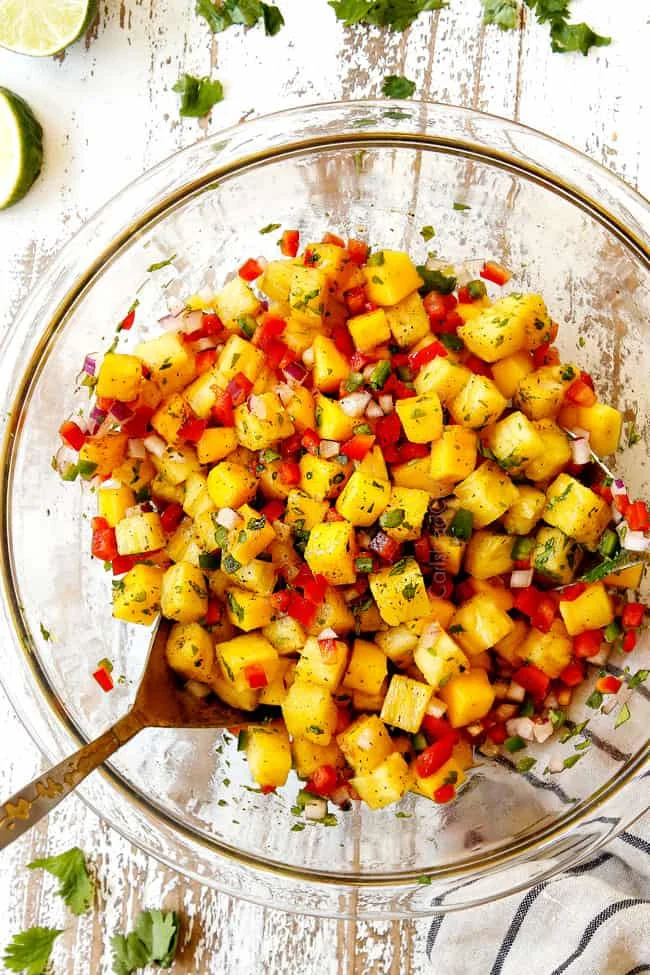
This fresh mango pineapple salsa balances juicy fruit with crunchy pepper, red onion, jalapeño, herbs and lime. It comes together quickly and works as a dip or a bright topping for grilled meat, fish and tacos.
Ingredients
- 330 g (2 cups)chopped ripe pineapple
- 2ripe mangoes, chopped
- 1red pepper, diced
- 50 g (⅓ cup)diced red onion
- 1–2jalapeños, seeded, deveined and minced (use 1 for a very mild salsa)
- 5 g (⅓ cup, loosely packed)chopped coriander
- 2garlic cloves, finely minced (or 2.5 ml (½ tsp) garlic powder)
- 1.25 ml (¼ tsp) eachsalt, chilli powder and ground cumin
- 0.6–1.25 ml (⅛–¼ tsp)pepper
- 30 ml (2 tablespoons)lime juice
- 15 ml (1 tablespoon)cider vinegar
Instructions
- 1
Combine ingredients
Put all the salsa ingredients in a large bowl and toss until evenly mixed.
- 2
Adjust seasoning
Taste the salsa and add more jalapeño, salt or lime juice if you like.
- 3
Chill before serving
For the fullest flavour, refrigerate the salsa for 30–60 minutes.
What is mango pineapple salsa?
Salsa is a Mexican condiment, often made with chopped fresh ingredients and served alongside or on top of other foods. This version pairs sweet mango and pineapple with chilli, onion, herbs and citrus for a contrast of sweet, sharp and spicy flavours.
The fruit makes it juicy, while pepper and red onion add crunch. A short rest in the fridge lets the flavours mingle without any cooking.
Nutrition and macros by portion
The nutrition label shows one serving as written: 61 calories, 1g protein, 15g carbs, 0g fat.
| Portion | Adjustment | kcal | Protein | Carbs | Fat |
|---|---|---|---|---|---|
| Lighter | Serve with cucumber sticks | 43 kcal | 1g | 11g | 0g |
| This serving | As written | 61 kcal | 1g | 15g | 0g |
| Hungry | Add a larger portion | 92 kcal | 1g | 23g | 0g |
Most of the carbohydrates and natural sugars come from the pineapple and mango; the fruit and vegetables also provide some fibre. This salsa contains very little fat or protein, so serve it with grilled fish, chicken or beans and add a wholegrain side for a more balanced plate.
Choosing the fruit
Ripe pineapple: choose fruit that smells sweet and feels firm rather than soft or fermented. Cut it into small, even pieces so it is easy to scoop and distribute.
Mangoes: use ripe fruit that gives slightly when pressed but still holds its shape when chopped. Very soft mango can make the salsa mushy.
Balancing the heat
Jalapeños: removing the seeds and inner ribs keeps the heat gentler, as the recipe directs. Start with one for a mild salsa, then add more after tasting if you want extra warmth.
Seasoning: lime juice brings acidity, while salt, cumin and chilli powder round out the fruit’s sweetness. Add any extra seasoning gradually so the fresh flavours remain distinct.
Getting the texture right
Even pieces: chop the pineapple, mango and pepper to roughly similar sizes so each spoonful has a good mix. Mince the garlic and jalapeño finely to spread their flavour through the bowl.
Gentle mixing: toss just enough to combine the ingredients. Overmixing can crush ripe mango and release more juice than you want.
Why the resting time matters
Chilling: 30–60 minutes in the refrigerator gives the lime, vinegar, garlic and spices time to season the fruit and vegetables. The salsa is also refreshing when served cold.
Last-minute check: taste it again just before serving, since cold temperatures can make flavours seem less pronounced. Adjust with a little salt, lime or jalapeño as needed.
How to serve it
For dipping: serve the salsa with tortilla chips as a snack or party appetiser. A slotted spoon can help if the fruit releases a lot of juice.
As a topping: spoon it over grilled chicken, fish, pork or steak, or add it to tacos. It also adds a fresh, fruity contrast alongside simply cooked rice or beans.
Recipe notes & tips
- Use ripe but still firm mangoes so the pieces keep their shape.
- Begin with one jalapeño, then taste before adding more.
- Chop the ingredients to similar sizes for an even mix.
- Chill the salsa for 30–60 minutes for the best flavour.
- Taste once more just before serving and adjust the lime or salt.
- Use a slotted spoon if you prefer a less juicy topping.
Variations
- Add avocado: fold in diced avocado shortly before serving for a creamy contrast.
- Use fresh chilli: swap the jalapeño for another fresh chilli, adjusting the amount to taste.
- Add cucumber: mix in finely diced cucumber for extra crunch.
- Change the herbs: use chopped mint in place of some or all of the coriander.
- Make it smokier: add a little extra chilli powder to bring forward the warm spice.
Common mistakes to avoid
- Using overripe mango: it can collapse when mixed; choose fruit that is ripe but still firm.
- Adding too much chilli at once: the heat is hard to undo; start with one seeded jalapeño and taste.
- Chopping unevenly: large pieces are awkward to scoop; aim for similarly sized fruit and pepper.
- Mixing too vigorously: this can mash the mango; toss gently until combined.
- Skipping the final taste: cold salsa may need a little more seasoning; check it just before serving.
How to store
Keep the salsa covered in an airtight container in the refrigerator and use within 2–3 days for the best texture. Stir gently before serving; this fresh salsa is not suited to reheating.
Frequently asked questions
Can I make this salsa ahead?
Yes. Make it a few hours ahead and keep it covered in the refrigerator. For the best texture, add avocado only shortly before serving if you use it.
How can I make it less spicy?
Use one jalapeño and remove its seeds and inner ribs, as directed. You can also leave the chilli out and add it later to individual portions.
Can I use tinned pineapple?
Yes, but drain it well first so it does not make the salsa watery. Fresh pineapple gives the mixture a firmer texture.
What can I serve with mango pineapple salsa?
Serve it with tortilla chips, or spoon it over grilled chicken, fish, pork, steak or tacos.
Why is my salsa watery?
Ripe fruit releases juice, especially after chilling. Drain a little liquid or serve it with a slotted spoon.
Cook it from the original
This recipe comes from carlsbadcravings.com. Their page has the author’s own photos, notes and tips — the best place to cook it from.
Open the recipe on carlsbadcravings.com