
Mashed Sweet Potatoes
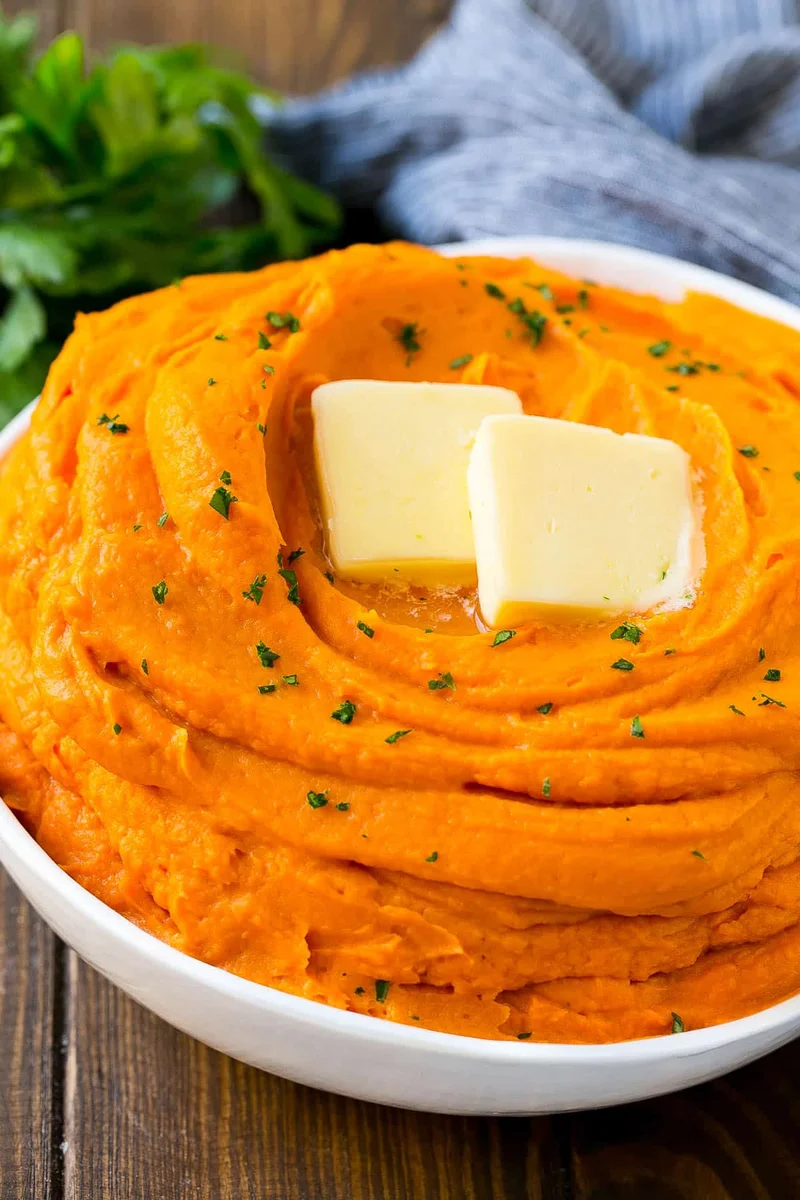
These creamy mashed sweet potatoes are baked until tender, then blended with milk, butter and salt. They make a comforting side for chicken, meat or fish, with parsley or extra butter to finish if you like.
Ingredients
- 1.36 kg (3 lb)sweet potatoes
- 80 ml (1/3 cup)milk
- 71 g (5 tablespoons), meltedbutter
- 1/2 teaspoonsalt
- to tastecooking spray
- 1 tablespoon, optionalchopped parsley
- to taste, optionalpats of butter
Instructions
- 1
Heat the oven
Preheat the oven to 204°C (400°F). Scrub the sweet potatoes and prick each one several times with a fork.
- 2
Arrange the potatoes
Coat a sheet pan with cooking spray, then set the sweet potatoes on it.
- 3
Bake until tender
Bake for 1 hour, or until the potatoes are tender. Let them cool slightly, then peel off the skins, or halve them and scoop out the flesh.
- 4
Blend until smooth
Put the sweet potato flesh, milk, melted butter and salt in a food processor. Process until smooth and creamy. For a coarser texture, mash by hand with a masher or fork instead.
- 5
Choose a flavour
Refer to the accompanying post text for different flavour variations.
- 6
Finish and serve
Serve with pats of butter and/or chopped parsley on top, if desired.
What are mashed sweet potatoes?
Mashed sweet potatoes are a familiar American-style side dish made by cooking the roots until soft, then mashing or blending them. Their naturally sweet, earthy flavour pairs well with savoury mains.
This version bakes the potatoes whole before blending them with milk and butter. Baking keeps the preparation straightforward and gives the flesh time to become tender enough to turn creamy.
Nutrition and macros by portion
The nutrition label shows one serving as written: 286 calories, 4g protein, 46g carbs, 10g fat.
| Portion | Adjustment | kcal | Protein | Carbs | Fat |
|---|---|---|---|---|---|
| Lighter | Use less butter | 200 kcal | 3g | 32g | 7g |
| This serving | As written | 286 kcal | 4g | 46g | 10g |
| Hungry | Serve a larger portion | 429 kcal | 6g | 69g | 15g |
The sweet potatoes provide most of the carbohydrates, while the butter contributes much of the fat; the milk adds a little protein alongside its other nutrients. Pair a serving with chicken, fish or another protein-rich main and vegetables to make a more varied plate.
Why bake the potatoes whole?
Whole potatoes: baking them in their skins is the central technique here. Pricking them first lets steam escape, while the oven softens the flesh without needing to peel or chop the raw potatoes.
Getting the texture right
Smooth mash: a food processor makes the potato, milk and butter into a creamy mixture. Stop once it is smooth rather than processing longer than needed.
Coarser mash: use a masher or fork by hand instead. This leaves more texture in the potatoes and gives you control over how thoroughly they are crushed.
Checking for doneness
Tender centres: bake for the stated 1 hour, then check whether the potatoes are soft enough to scoop easily. If they are still firm, continue baking until tender.
Safe handling: let the potatoes cool slightly before peeling or halving them. They will still be hot inside after coming out of the oven.
The role of each ingredient
Sweet potatoes: they provide the bulk of the dish and its naturally sweet flavour. Scrubbing and baking them whole keeps the preparation simple.
Milk and butter: these are blended into the cooked flesh to make the mash creamy and rich. Add them in the quantities given, then process until the texture is even.
Salt and garnish: salt seasons the mash, while parsley and extra butter are optional finishing touches. Add the toppings at serving time if using them.
What to serve alongside
These potatoes are suggested as an accompaniment to chicken, meat or fish. Their soft texture also works well as part of a meal with a contrasting crisp or fresh side.
For a balanced plate, pair a serving with a protein-rich main and vegetables. The sweet potatoes supply most of the dish's carbohydrates, while butter contributes much of its fat.
Recipe notes & tips
- Prick the potatoes before baking so steam can escape.
- Arrange the potatoes in a single layer on the sheet pan.
- Check that the centres are tender before removing the potatoes from the oven.
- Cool the potatoes slightly before peeling or scooping out the flesh.
- Use a masher or fork if you prefer a less smooth finish.
- Add the optional parsley and butter just before serving.
Variations
- Parsley finish: scatter chopped parsley over the mash just before serving.
- Extra buttery: add the optional pats of butter on top at the table.
- Coarse texture: mash the cooked potato by hand with a masher or fork.
- Smooth texture: process the potato mixture until creamy.
- Sweet or savoury: consult the accompanying post text for its flavour variation options.
Common mistakes to avoid
- Skipping the fork pricks: prick the potatoes before baking so steam can escape.
- Peeling while piping hot: let the potatoes cool slightly before handling them.
- Blending before the potatoes are tender: bake until the flesh is soft enough to scoop.
- Overprocessing: stop once the mixture is smooth and creamy.
- Expecting a coarse mash from the processor: use a masher or fork for a chunkier texture.
How to store
Refrigerate leftovers in a covered container and use within 3 to 4 days. Reheat gently in the microwave or in a saucepan, stirring as needed; add a small splash of milk if the mash seems too thick.
Frequently asked questions
Can I mash the sweet potatoes without a food processor?
Yes. The method suggests using a potato masher or fork for a coarser texture.
How do I know when the sweet potatoes are done?
They are ready when tender after baking. The flesh should be easy to scoop out.
Do I need to peel the sweet potatoes before baking?
No. Scrub and prick them, then bake whole. Once they have cooled slightly, peel them or halve them and scoop out the insides.
Can I make these ahead?
Yes. Store the prepared mash in a covered container in the fridge for up to 3 to 4 days, then reheat gently before serving.
What goes well with mashed sweet potatoes?
They make a side for chicken, meat or fish. Add vegetables to round out the meal.
Can I leave out the parsley or topping butter?
Yes. Both are listed as optional, so you can serve the mash without either topping.
Cook it from the original
This recipe comes from dinneratthezoo.com. Their page has the author’s own photos, notes and tips — the best place to cook it from.
Open the recipe on dinneratthezoo.com