
Chicken Cutlets
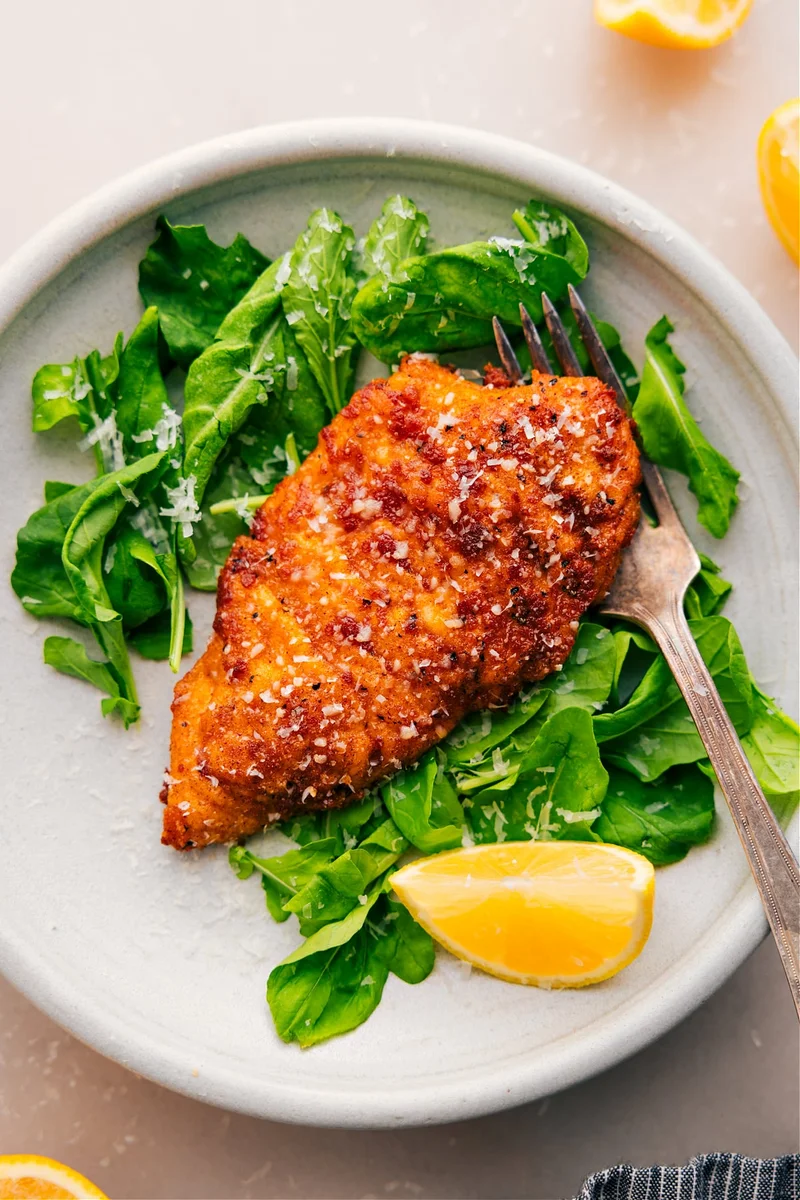
These American-style chicken cutlets are thin pieces of chicken coated in a savoury Parmesan and spice mixture, then cooked in a skillet until golden. They make a quick dinner without deep-frying.
Ingredients
- 454 g (1 pound)boneless, skinless chicken breasts, cut into 6 pieces (2 breasts)
- 30 g (1/4 cup)flour
- 25 g (1/4 cup)grated Parmesan cheese, with a sandy texture (see note 1)
- 1/2 teaspoon, plus more as neededsalt
- 1/2 teaspoonpepper
- 1 teaspoonpaprika
- 1 teaspoongarlic powder
- 45 ml (3 tablespoons), dividedolive oil
- 14 g (1 tablespoon)unsalted butter
- 1lemon (optional)
Instructions
- 1
Mix the coating
In a shallow bowl, combine the flour, Parmesan, salt, pepper, paprika and garlic powder.
- 2
Prepare the chicken
Cut each chicken breast into 3 pieces. Place them between two sheets of plastic wrap and pound to 6 mm (1/4 inch) thick. Rub the chicken with 1 tablespoon olive oil, divided between both sides, then coat each piece evenly in the flour mixture.
- 3
Cook the chicken
Heat 2 tablespoons olive oil and 1 tablespoon butter in a large skillet over medium-high heat. Add half the chicken and cook for 3–4 minutes on one side, until golden brown. Turn and cook for 1–2 minutes on the other side.
- 4
Finish the batches
Transfer the cooked chicken to a plate, sprinkle lightly with salt and, if desired, lemon juice, then cover with foil to keep warm. Cook the remaining chicken, adding more oil if needed.
What are chicken cutlets?
Chicken cutlets are thin portions of chicken that cook quickly in a pan. This American-style version uses a flour-and-Parmesan coating seasoned with paprika and garlic powder.
Pounding the chicken to an even thickness helps it cook in the short time the recipe allows. The coating browns in a skillet, so there is no need for deep-frying.
Nutrition and macros by portion
The nutrition label shows one serving as written: 407 calories, 38g protein, 10g carbs, 24g fat.
| Portion | Adjustment | kcal | Protein | Carbs | Fat |
|---|---|---|---|---|---|
| Lighter | Less oil, extra vegetables | 285 kcal | 27g | 7g | 17g |
| This serving | As written | 407 kcal | 38g | 10g | 24g |
| Hungry | Larger cutlet portion | 611 kcal | 57g | 14g | 36g |
The chicken supplies most of the protein, while the flour contributes most of the carbohydrates. Olive oil, butter and Parmesan account for much of the fat. Serve a cutlet with vegetables or salad to add volume and balance the plate.
The Parmesan coating
Sandy Parmesan: finely grated cheese blends evenly with the flour and spices, helping each piece get a consistent coating.
Even coverage: press the chicken into the mixture on both sides, then let excess fall away before it goes into the pan.
Pounding the chicken
Even thickness: place each piece between two sheets of plastic wrap and pound it to about 6 mm (1/4 inch). This gives the pieces a similar cooking time.
Gentle pressure: work across the meat without tearing it, so the cutlets remain intact for coating and turning.
Getting a golden crust
Hot pan: heat the oil and butter over medium-high heat before adding the first batch. The chicken should sizzle when it touches the skillet.
Room to brown: cook half the pieces at a time as directed. Crowding the pan can make it harder for the coating to brown evenly.
Checking for doneness
Use the recipe's timing as a guide: cook the first side for 3–4 minutes, then the second for 1–2 minutes. Look for a golden coating and chicken that is cooked through.
The pieces are thin, so avoid leaving them in the skillet longer than needed. Keep the first batch covered with foil while the second cooks.
Serving the cutlets
A squeeze of lemon adds a bright finish, while a light sprinkle of extra salt can season the surface just before serving.
Serve with a green salad or vegetables for a fresh contrast, or add potatoes, rice or bread if you would like a more filling meal.
Recipe notes & tips
- Pound the chicken to an even thickness so the pieces cook at a similar rate.
- Use a shallow bowl wide enough to coat each piece without bending it.
- Let excess flour mixture fall away before placing the chicken in the skillet.
- Cook in two batches to give the cutlets room to brown.
- Keep the first batch loosely covered with foil while the second batch cooks.
- Add lemon juice at the end if you want a sharper, fresher finish.
Variations
- Add herbs: Mix dried Italian herbs into the flour and Parmesan coating.
- Use extra lemon: Serve with additional lemon wedges for squeezing at the table.
- Change the seasoning: Add a little dried oregano to the coating.
- Make it cheesier: Finish the cooked cutlets with a little extra grated Parmesan.
- Serve as a sandwich: Place a cutlet in a soft roll with salad leaves.
Common mistakes to avoid
- Uneven thickness: Pound the chicken to about 6 mm (1/4 inch) so it cooks consistently.
- Coating clumps: Shake off excess flour mixture before cooking each piece.
- Crowded skillet: Cook half the chicken at a time to help the coating brown.
- Pan not hot enough: Wait until the oil and butter are heated before adding the chicken.
- Overcooking: Use the stated cooking times as a guide and check that the chicken is cooked through.
- Dry first batch: Cover the cooked cutlets with foil while the remaining pieces cook.
How to store
Refrigerate leftovers in an airtight container for up to 3 days. Reheat in a skillet over medium heat until hot, turning as needed to refresh the coating.
Frequently asked questions
Can I use chicken thighs instead of breasts?
The recipe is written for chicken breasts, which can be cut and pounded into thin pieces. Thighs may vary in thickness and may need different preparation and cooking time.
Can I make these cutlets without Parmesan?
Parmesan is part of the coating and adds savoury flavour. You can leave it out, though the coating will taste different.
How thin should the chicken be?
Pound each piece to about 6 mm (1/4 inch) thick, as specified in the method.
Can I cook all the chicken at once?
The method calls for cooking half at a time in a large skillet. If the pieces do not fit without crowding, keep to the two batches.
Do I have to add lemon?
No. Lemon is optional; sprinkle the chicken with lemon juice at the end if you like its bright flavour.
Cook it from the original
This recipe comes from chelseasmessyapron.com. Their page has the author’s own photos, notes and tips — the best place to cook it from.
Open the recipe on chelseasmessyapron.com