
Puff Pastry Salmon Parcels
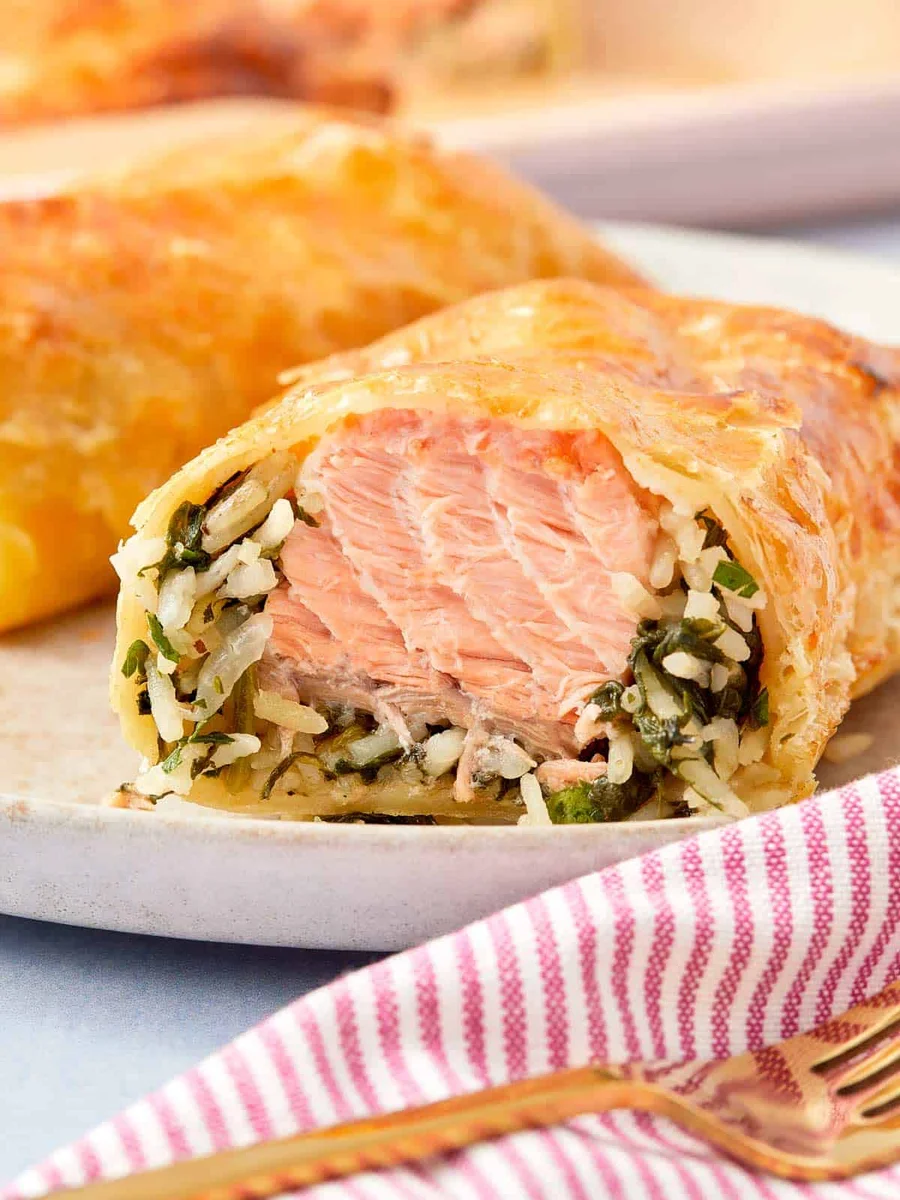
These salmon parcels wrap tender salmon and lemony spinach rice in crisp puff pastry. They make a satisfying, neatly portioned meal that is practical to serve warm for lunch or dinner.
Ingredients
- 15 ml (1 tablespoon)olive oil
- 1 largeonion, chopped
- 65 g (1/3 cup)white long-grain or brown rice
- 60 g (2 cups)baby spinach leaves
- 2.5 g (1/2 teaspoon)salt, to season
- 1 g (1/4 teaspoon)lemon pepper or cracked black pepper
- 15 g (1 tablespoon)garlic, minced
- 160 ml (2/3 cup)water
- 15 ml (3 teaspoons)stock powder or chicken bouillon powder
- 60 ml (4 tablespoons)freshly squeezed lemon juice
- 8 g (2 tablespoons)fresh parsley, chopped
- 2 sheetspuff pastry
- 4skinless, boneless salmon fillets
- 1egg, whisked
Instructions
- 1
Cook the filling
Heat the oil in a medium saucepan and fry the onion until soft and translucent. Add the rice and spinach and cook for 1 minute, until the spinach wilts. Add the garlic and sauté for about 30 seconds, until fragrant, then season with the salt and pepper.
- 2
Add the stock
Pour in the water and add the stock powder. Bring to the boil, stirring occasionally to combine the ingredients.
- 3
Simmer the rice
Reduce the heat to low, cover the pan and simmer gently for 12–15 minutes, or until the rice is cooked through.
- 4
Cool the filling
Take the pan off the heat and stir in the lemon juice and parsley. Set the mixture aside to cool.
- 5
Prepare the oven
Preheat the oven to 210°C (410°F). Line a baking tray with baking or parchment paper.
- 6
Cut the pastry
Cut each pastry sheet in half to make four rectangles.
- 7
Fill the pastry
Place a rectangle with its shorter edge facing you. Spoon one quarter of the rice and spinach mixture onto the lower half, leaving a 2 cm (1-inch) border around the edges.
- 8
Add the salmon
Place a salmon fillet on top of the rice mixture. Brush the pastry edges with water.
- 9
Seal each parcel
Fold the empty half of the pastry over the salmon and press the edges firmly together with a fork. Transfer the parcel to the prepared tray, then repeat with the remaining pastry, filling and salmon.
- 10
Brush and bake
Brush the parcels with the whisked egg. Bake for 20–25 minutes, until golden brown.
- 11
Serve warm
Slice each parcel in half and serve warm.
What are salmon parcels?
A salmon parcel is a portion of fish enclosed in pastry and baked until the outside is crisp and the fish is cooked. This version pairs the salmon with spinach and rice, making the filling a complete part of each parcel.
The American-style recipe brings together familiar ingredients rather than relying on a complex sauce. Cooking the rice with spinach, stock and aromatics gives it flavour before it is wrapped in pastry.
Nutrition and macros by portion
The nutrition label shows one serving as written: 524 calories, 23g protein, 37g carbs, 31g fat.
| Portion | Adjustment | kcal | Protein | Carbs | Fat |
|---|---|---|---|---|---|
| Lighter | More spinach, less pastry | 367 kcal | 16g | 26g | 22g |
| This serving | As written | 524 kcal | 23g | 37g | 31g |
| Hungry | Serve a whole parcel | 786 kcal | 35g | 56g | 47g |
The rice and pastry contribute most of the carbohydrates, while the pastry and olive oil account for much of the fat. Salmon supplies protein, with smaller contributions from the rice and egg. Pair a parcel with salad or vegetables to add freshness and balance the plate.
Build flavour in the filling
Onion and garlic: soften the onion first, then give the garlic only about 30 seconds in the pan so it becomes fragrant without browning.
Stock and seasoning: the stock powder seasons the rice as it cooks, while lemon pepper or cracked black pepper adds a gentle peppery note.
Lemon and parsley: stir these in once the pan is off the heat to keep their fresh flavours distinct.
Cook and cool the rice
Rice choice: either white long-grain or brown rice works, but the listed simmering time is a guide; check that the grains are cooked through.
Cooling: let the filling cool before assembling. A hot filling can soften the pastry before it goes into the oven and make the parcels harder to handle.
Seal the pastry well
Even filling: divide the rice mixture between the four rectangles so each parcel gets a similar amount. Keep it on the lower half and leave the 2 cm border clear.
Firm edges: brush the border with water, fold the pastry over, then press firmly with a fork. A good seal helps keep the filling inside as the pastry puffs.
Look for golden pastry
Bake the parcels at 210°C for 20–25 minutes, until the pastry looks puffed and golden brown. If they need longer to colour, keep baking and check them frequently.
Allow for variation between ovens and pastry brands. The pastry colour is the cue given in this recipe; avoid opening the oven repeatedly while the parcels bake.
Serve and portion
Cutting each parcel in half makes the flaky layers and filling easy to serve. They are best eaten warm, while the pastry is crisp.
A simple green salad or steamed vegetables make a fresh accompaniment alongside the rich pastry and filling.
Recipe notes & tips
- Let the rice mixture cool before placing it on the pastry.
- Keep the pastry chilled until you are ready to assemble the parcels.
- Leave the full 2 cm border clear so the edges can be sealed.
- Use a fork to press along the entire edge of each parcel.
- Bake on the lined tray with space between parcels.
- Check that the pastry is golden brown before taking the tray out.
Variations
- Brown rice: use brown rice as suggested, and simmer until it is cooked through.
- Black pepper: swap the lemon pepper for cracked black pepper.
- Fresh herbs: vary the chopped parsley with another fresh herb you enjoy.
- Extra spinach: add more baby spinach to the filling, allowing it to wilt before adding the liquid.
- Smaller servings: cut each baked parcel into smaller pieces for sharing.
Common mistakes to avoid
- Filling while hot: warm filling can soften the pastry; cool it before assembling.
- Crowding the border: filling at the edges can interfere with sealing; leave 2 cm clear.
- Loose sealing: an open seam can let filling escape; press the edges firmly with a fork.
- Overcooking the garlic: it can brown quickly; sauté for about 30 seconds, just until fragrant.
- Rushing the rice: undercooked rice affects the filling; simmer for 12–15 minutes and check for doneness.
- Removing too early: pale pastry may not be crisp; bake until golden brown.
How to store
Refrigerate leftover parcels in a covered container and eat within 2 days. Reheat in an oven until hot throughout to help the pastry crisp again; it may soften if reheated in a microwave.
Frequently asked questions
Can I use brown rice?
Yes. The recipe allows either white long-grain or brown rice. Simmer until the rice is cooked through, as the time can vary with the type of rice.
Can I use cracked black pepper instead of lemon pepper?
Yes. The recipe lists cracked black pepper as an alternative to lemon pepper.
Why should the filling cool before assembly?
Cooling helps prevent the filling from softening the pastry while you shape the parcels. It also makes the filling easier to spoon onto the pastry.
How do I know when the parcels are ready?
Bake for 20–25 minutes at 210°C, until the pastry is golden brown. Check the parcels towards the end of the baking time.
Can I prepare the parcels ahead?
You can assemble them ahead and keep them covered in the fridge until ready to bake. Brush with the whisked egg and bake as directed.
What can I serve with salmon parcels?
A green salad or steamed vegetables are easy accompaniments. Their freshness complements the pastry and savoury filling.
Cook it from the original
This recipe comes from cafedelites.com. Their page has the author’s own photos, notes and tips — the best place to cook it from.
Open the recipe on cafedelites.com