
Loaf Pan Basque Cheesecake Recipe
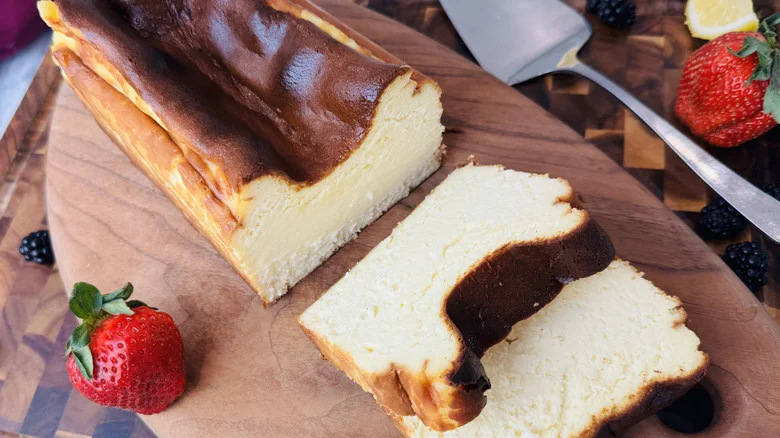
This Basque-style cheesecake is baked in a loaf tin for a creamy centre and deeply browned top, without a water bath. It is a straightforward make-ahead dessert that needs time to chill before serving.
Ingredients
- 3 (227 g) blockscream cheese, softened
- 200 g (1 cup)granulated sugar
- 10 ml (2 teaspoons)vanilla bean paste or extract
- ¾ teaspoonkosher salt
- 30 g (¼ cup)plain flour
- 4 largeeggs, divided
- 360 ml (1 ½ cups)double cream
Instructions
- 1
Heat the oven
Preheat the oven to 200°C (400°F).
- 2
Line the tin
Line a 20 x 10 cm (8 x 4-inch) loaf tin with baking parchment. If using a 23 x 13 cm (9 x 5-inch) tin, reduce the baking time slightly.
- 3
Blend cheese and sugar
Pulse the cream cheese and sugar in a food processor until smooth.
- 4
Add first ingredients
Add the vanilla, salt, flour and one egg, then pulse to combine.
- 5
Add remaining eggs
Add the remaining eggs one at a time, pulsing between each addition.
- 6
Mix in the cream
Add the double cream and lemon juice or zest, if using, and process until smooth.
- 7
Fill the tin
Pour the batter into the prepared loaf tin.
- 8
Bake the cheesecake
Bake for 50–55 minutes, until the top is golden brown and the cheesecake jiggles slightly.
- 9
Cool and chill
Cool the cheesecake to room temperature on a cooling rack, then refrigerate for at least 2 hours or overnight. It will deflate as it cools.
- 10
Unmould the cheesecake
Use the overhanging parchment to lift the cheesecake out of the tin, then remove the parchment.
- 11
Serve chilled
Transfer the cheesecake to a serving platter and serve chilled, with fresh berries if desired.
What is Basque cheesecake?
Basque cheesecake is associated with the Basque Country in northern Spain. It is known for a browned, caramelised surface and a soft, creamy middle, rather than a biscuit base.
This version is baked in a loaf tin, making a tall, narrow cake that is easy to portion. The high oven temperature gives the top its characteristic colour without a water bath.
Nutrition and macros by portion
The nutrition label shows one serving as written: 599 calories, 10g protein, 34g carbs, 48g fat.
| Portion | Adjustment | kcal | Protein | Carbs | Fat |
|---|---|---|---|---|---|
| Lighter | Serve a smaller slice | 419 kcal | 7g | 24g | 34g |
| This serving | As written | 599 kcal | 10g | 34g | 48g |
| Hungry | Serve a larger slice | 899 kcal | 15g | 51g | 72g |
The cream cheese and double cream provide most of the fat, while sugar and flour contribute carbohydrates; the eggs and cheese supply protein. Serve a slice with fresh berries for a simple plate with a fresh contrast.
The cream cheese base
Softened cheese: letting it come to room temperature helps it blend smoothly with the sugar. Pulse until there are no obvious lumps before adding the other ingredients.
Sugar: blending it with the cheese at the start helps distribute it through the batter. Scrape down the food processor if mixture clings to its sides.
Adding the eggs
One at a time: adding the eggs in stages gives the mixture a chance to combine evenly. Pulse between additions rather than adding them all together.
Gentle blending: stop once the batter is smooth. The method relies on a food processor, but avoid processing for longer than needed.
Getting the bake right
Golden top: the surface should be deeply coloured by the end of the 50–55 minutes. The high heat is part of the style, so do not expect a pale top.
Slight jiggle: the centre should still move a little when the tin is carefully nudged. It firms as the cheesecake cools and chills.
Why the parchment matters
Leave an overhang: line the loaf tin so parchment extends above its sides. That gives you a way to lift the delicate cheesecake out after chilling.
Tin size: the recipe specifies an 20 x 10 cm tin. A 23 x 13 cm tin is also noted, but the bake time should be reduced slightly.
Cooling and serving
Cool first: let the cheesecake reach room temperature on a rack before refrigerating. It will sink as it cools; this is expected.
Chill thoroughly: allow at least 2 hours in the refrigerator, or leave it overnight. Serve cold, with fresh berries if you like.
What to serve alongside it
Fresh berries: their bright, fresh flavour works well alongside the rich cheesecake, and they are suggested as an optional accompaniment.
Small slices: the cake is creamy and substantial, so narrow portions are practical; diners can always come back for another piece.
Recipe notes & tips
- Soften the cream cheese before blending to help the batter become smooth.
- Line the tin with enough parchment overhang to lift the chilled cheesecake out.
- Add the eggs one at a time and pulse between additions.
- Use the slight jiggle in the centre as a doneness cue, alongside the golden top.
- Allow the cheesecake to chill for at least 2 hours before serving.
- Reduce the bake time slightly if using a 23 x 13 cm tin.
Variations
- Add citrus: blend in lemon juice or zest if using, as mentioned in the method.
- Serve with berries: add fresh berries alongside each chilled slice.
- Use vanilla extract: choose it in place of vanilla bean paste.
- Try a different tin: use a 23 x 13 cm loaf tin and reduce the baking time slightly.
Common mistakes to avoid
- Cold cream cheese: soften it before blending so the mixture can become smooth.
- Adding all the eggs together: add them one at a time and pulse between additions.
- Overbaking the centre: take the cheesecake out when the top is golden and the centre still jiggles slightly.
- Skipping the chill: refrigerate for at least 2 hours or overnight so it is ready to serve chilled.
- No parchment overhang: leave enough paper above the tin to lift out the cheesecake after chilling.
How to store
Keep the cheesecake covered in the refrigerator and eat within 3–4 days. Serve it chilled; if it has been out for serving, return leftovers to the fridge promptly.
Frequently asked questions
Does this cheesecake need a water bath?
No. The recipe bakes it directly in a parchment-lined loaf tin.
How do I know when it is baked?
The top should be golden brown and the cheesecake should jiggle slightly when moved.
Why does the cheesecake sink as it cools?
The method notes that it will deflate during cooling. This is expected for this cheesecake.
Can I make it the day before?
Yes. Chill it overnight, then lift it from the tin using the parchment overhang and serve cold.
Can I use a larger loaf tin?
The recipe allows for a 23 x 13 cm (9 x 5-inch) tin. Reduce the baking time slightly.
What can I serve with it?
Fresh berries are suggested as an optional accompaniment.
Cook it from the original
This recipe comes from thedailymeal.com. Their page has the author’s own photos, notes and tips — the best place to cook it from.
Open the recipe on thedailymeal.com