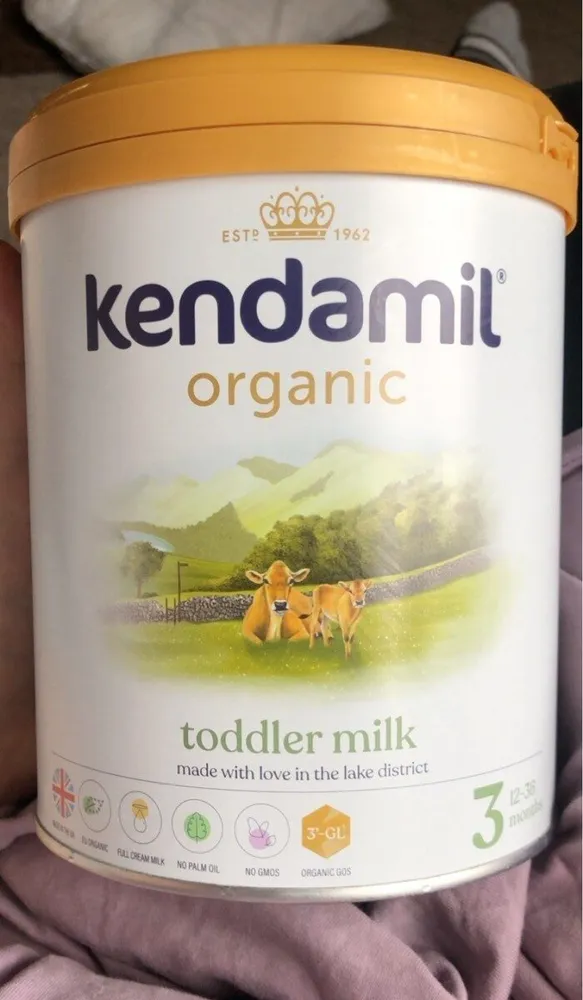
Toddler milk
5056000502940 · opf
100g of Toddler milk contains 485 calories (kcal), 11.4g protein, 57g carbs and 23.2g fat.
Negative
per 100 gProcessingUltra-processed
1
2
3
Ultra-processed
SugarHigh sugar 55.7 g
0522.545
Saturated fatHigh saturated fat 9.3 g
01.5510
EnergyHigh calorie density 485 kcal
0150400800
ProteinLow protein 11.4 g
014.524.348.5
FibreLow fibre 1.5 g
03612
Calculate by serving size
Quantity
Serving
485
kcal
11.4
protein
57.0
carbs
23.2
fat
Nutrition Facts per 100g
Protein 9%
Carbs 48%
Fat 43%
| Nutrient | Amount | Level |
|---|---|---|
| Energy | 485 kcal | |
| Fat | 23.2g | high |
| Saturated | 9.3g | high |
| Carbs | 57g | |
| Sugars | 55.7g | high |
| Fibre | 1.5g | |
| Protein | 11.4g | |
| Salt | ? |
Common Questions
How many calories are in Toddler milk?
Toddler milk contains 485 kcal per 100g.
Is Toddler milk ultra-processed?
Toddler milk is NOVA group 4 (ultra-processed) — an ultra-processed product, so it is worth balancing with whole foods.
Ingredients
Organic whole milk, Organic skimmed milk Organic lactose (from milk. Organic vegetable oils (sunflower, coconut, rapeseed), Organic demineralised milk whey protein powder, Organic galacto-oligosac - chandes (from milk). Calcium lactate, Calcium phosphate, Potassium hydroxide, Vitamin C, Calcium citrate. Oil from the microalgae Schizochytrium sp. Potassium chloride, Ferrous sulphate. Vitamin E Zinc sulphate, Niacin, Pantothenic acid, Copper sulphate, Thiamin, Riboflavin, Vitamin A Vitamin B6, Manganese sulphate, Folic acid, Sodium selenite Potassium iodide, Vitamin K Vitamin D3, Biotin, Vitamin B12 Allergy Advice: For Allergens See Ingredients In Bold. IMPORTANT NOTICE: Kendamil toddler milk is only for use from the 12th month and should be used as part of a mixed diet. It should not be used as a breastmilk substitute before 6 months. The decision to start weaning including the use of this product should only be made on the advice of a healthcare professional. Breast milk is best for babies and breastfeeding should continue for as long as possible When beaker feeding do not allow prolonged contact of the milk feeds with your baby's teeth as this increases the risk of tooth decay. Make sure your baby's teeth are cleaned each night after the last feed
Category
Other Servings
Related lists
English