
Pâtes piccata au poulet
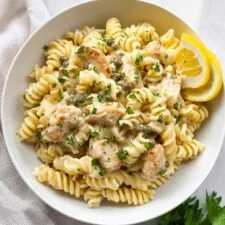
Les pâtes piccata au poulet sont un délicieux plat fusion qui associe de tendres lamelles de poulet dorées à une sauce piccata acidulée et savoureuse, mélangée à des pâtes radiator al dente. Cette recette offre un bel équilibre entre le citron, les câpres, l’ail et le parmesan, le tout relevé par une riche sauce au beurre, au vin blanc et au bouillon de poulet. Ce plat réconfortant, idéal pour un dîner en semaine, se prépare facilement avec des ingrédients de base du placard.
Ingrédients
- 2 cups chicken broth
- 1/2 chicken bouillon cube
- 1 teaspoon dried parsley
- 1 teaspoon Dijon mustard
- 1 1/4 lbs. boneless skinless chicken breast
- Salt and pepper, to taste
- 3 tablespoons olive oil, divided
- 1/4 cup flour
- 1/4 cup parmesan cheese, grated
- 3/4 cup dry white wine
- 6 tablespoons cold salted butter, divided
- 3-4 cloves garlic, minced
- 3 tablespoons flour
- 1/2 lb. radiator pasta
- 1/4 cup pasta water (reserved)
- 2 tablespoons capers, drained
- 1/4 cup fresh lemon juice
- 1/2 cup parmesan cheese, grated
- Freshly sliced lemons
- Roughly chopped parsley
Préparation
- 1
Prepare the Sauce Ingredients: Combine the chicken broth, bouillon cube, dried parsley, and Dijon mustard in a medium measuring cup with a spout. Set this mixture aside to use later in your sauce.
- 2
Mix Flour and Parmesan for Chicken Coating: In a medium bowl, mix together the flour and grated parmesan cheese for coating the chicken. Set this aside as well.
- 3
Tenderize and Cut the Chicken: Cover the chicken breasts with plastic wrap and gently pound them with the textured side of a meat mallet to tenderize. Cut the chicken into 2-inch strips and thoroughly pat dry with paper towels to ensure the coating adheres well.
- 4
Oil and Coat the Chicken: Rub 1 tablespoon of olive oil evenly over the chicken strips. This will help the flour and parmesan coating stick. Then, one piece at a time, coat the chicken strips thoroughly in the flour and parmesan mixture.
- 5
Sear the Chicken: Heat the remaining 2 tablespoons of olive oil in a skillet over medium-high heat. Add the coated chicken strips and cook until they turn golden and are cooked through, about 3-4 minutes per side. Once done, remove the chicken and set it aside.
- 6
Boil the Pasta Water: While cooking the chicken, bring a large pot of water to a boil. Add about ½ tablespoon kosher salt once boiling is reached. This salted boiling water will be used to cook the pasta.
- 7
Deglaze the Skillet with Wine: In the same skillet used to cook chicken, reduce the heat to medium and pour in the dry white wine. Use a silicone spatula to scrape the browned bits off the bottom and sides of the pan to incorporate flavor. Let the wine simmer until reduced by half, about 4-5 minutes.
- 8
Add Butter, Garlic, and Flour: Stir in 3 tablespoons of cold salted butter and the minced garlic. Cook for about 1 minute until fragrant. Sprinkle the flour over the mixture and continuously stir for another minute to create a roux base for the sauce.
- 9
Add the Sauce Mixture: Slowly add the previously prepared chicken broth mixture in small splashes, stirring constantly. Bring this mixture to a boil, then reduce to a simmer and cover partially. Allow the sauce to cook gently while you prepare the pasta.
- 10
Cook the Pasta to Al Dente: Add the radiator pasta to the boiling salted water and cook according to package instructions until al dente. Before draining, ladle ¼ cup of pasta water from the top foam to reserve for sauce use. Drain the pasta thoroughly.
- 11
Combine Pasta with Sauce: Add the drained pasta, reserved pasta water, and capers to the simmering sauce in the skillet. Toss well to coat the pasta evenly. Reduce the heat to low, then stir in grated parmesan cheese and freshly squeezed lemon juice.
- 12
Reintroduce Chicken: Return the cooked chicken strips to the skillet and stir to blend with the pasta and sauce, allowing it to heat through thoroughly. The sauce will thicken and absorb into the pasta as it stands.
- 13
Finish with Butter and Garnish: Stir in the remaining cold butter, combining it well to melt and enrich the sauce. Remove from heat, then garnish with freshly sliced lemon and chopped parsley. Serve immediately for best flavor.
Cuisinez-la avec la recette originale
Cette recette vient de busyrecipe.com. Leur page propose les photos, les notes et les astuces de l’auteur : le meilleur endroit pour la cuisiner.
Voir la recette sur busyrecipe.com