
Pâte sucrée
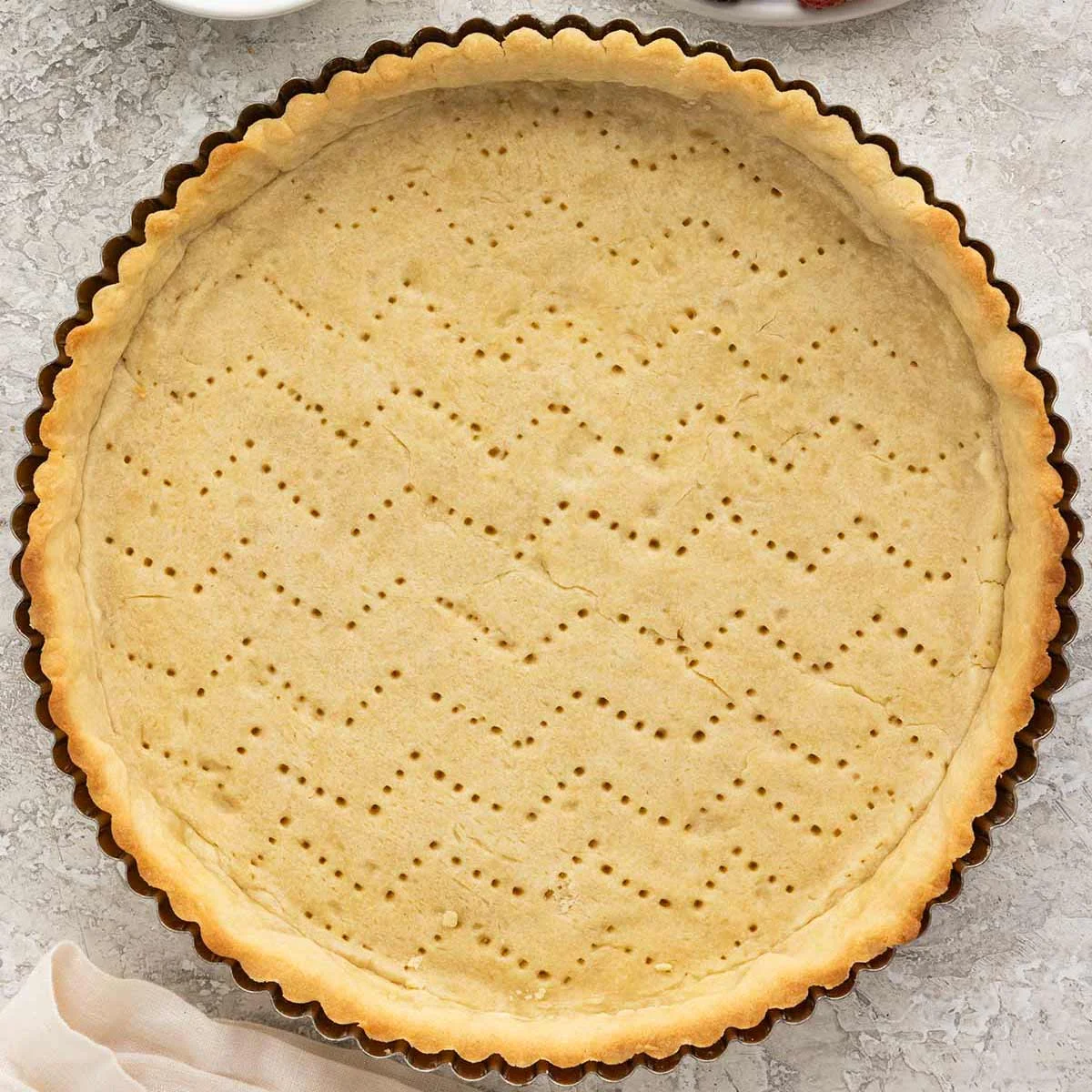
J'adore préparer une pâte à tarte maison, car cela me permet de contrôler entièrement sa saveur et sa texture et d'obtenir une base beurrée et tendre qui accueille parfaitement toute garniture sucrée ou salée.
Ingrédients
- 1 1/2 cup all-purpose flour
- 1/2 cup powdered sugar
- 1/4 teaspoon table salt
- 8 tablespoons unsalted butter
- 1 large egg
- 1/2 teaspoon vanilla extract
Préparation
- 1
Mix the Dry Ingredients – Add the flour, powdered sugar, and salt to a food processor. Pulse about 5 times, until combined.
- 2
Cut in the Butter – Slice the cold butter into 8 pieces, then evenly scatter it over the flour mixture. Pulse until the mixture resembles wet sand with some small coarse pieces, about 10 pulses.
- 3
Incorporate the Wet Ingredients – In a small bowl, whisk together the egg and vanilla. Evenly drizzle over the flour and butter mixture. Pulse until a dough forms together, but do not overmix, about 15 pulses.
- 4
Chill the Dough – Shape the dough into a flattened 1-inch-thick disk, then wrap it tightly in plastic wrap. Refrigerate until firm, about 1 hour, or freeze for 30 minutes.
- 5
Roll the Dough – Remove the dough from the refrigerator and let it sit at room temperature for 5 to 10 minutes until slightly pliable, which makes it easier to roll. Lightly dust the counter, dough, and rolling pin with flour. For easier transfer, you can place the dough on a sheet of parchment paper before dusting. Roll the dough, rotating and lightly dusting the bottom as needed to prevent sticking, until it’s about ⅛-inch thick, or large enough to fit your tart pan with a little overhang, roughly a 10 to 11-inch circle.
- 6
Form the Tart Shell – Gently ease the rolled dough into a 9- or 10-inch tart pan, pressing it against the bottom and sides to create an even layer. Roll a rolling pin over the top of the pan to trim the excess dough and create a level edge. Use any scraps to patch thin spots if needed. For less shrinkage during baking, press the dough slightly above the rim of the pan. Use a fork to dock the bottom of the crust, poking holes about 1 inch apart.
- 7
Freeze the Dough – Freeze the tart dough in the pan for 30 minutes. The dough should be very firm. This will help prevent shrinking when baked.
- 8
Heat the Oven – Set the oven rack in the center position. Heat to 375°F (191°C).
- 9
Add the Pie Weights – Place the tart pan on a sheet pan, then line the pie dish with a piece of parchment paper or foil, leaving some overhang to make it easy to lift out. Add the pie weights to cover the bottom and sides; do not overfill. Dried beans or rice can also be used.
- 10
Blind-Bake the Crust – Bake for 15 minutes. Transfer to a wire rack and carefully remove the parchment paper filled with weights. Follow the instructions for a partially or fully baked tart crust:For a Partially Baked Tart Crust: Bake for another 5 minutes, until the edges are lightly golden brown and crisp, but the bottom is slightly undercooked. Follow your recipe for filling and baking.For a Fully Baked Tart Crust: Bake until the edges are golden brown and the crust is fully cooked, about 10 minutes. Cool the crust completely on a cooling rack, about 30 to 40 minutes before adding the desired filling.
- 11
Cool – Transfer the tart crust in the tin to a wire rack. Cool completely before using.
- 12
Using the Crust – Proceed with the partially baked crust, adding the raw filling, and baking according to your recipe. For a fully baked crust, add your desired filling and toppings.
Cuisinez-la avec la recette originale
Cette recette vient de jessicagavin.com. Leur page propose les photos, les notes et les astuces de l’auteur : le meilleur endroit pour la cuisiner.
Voir la recette sur jessicagavin.com