
Pao cai du Sichuan (kimchi chinois)
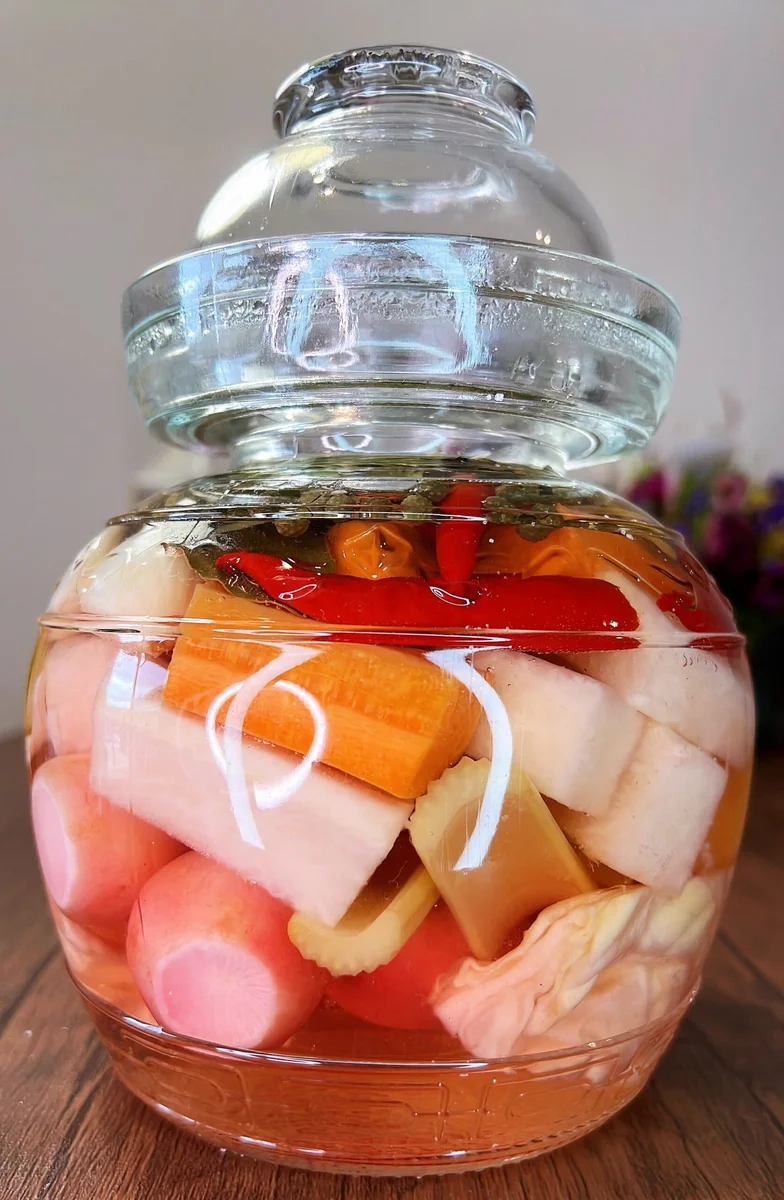
Il ne faut que 25 minutes pour préparer un authentique pao cai du Sichuan (kimchi chinois), qui peut se conserver plus de 30 ans. Ces légumes fermentés — chou, carottes, radis, radis blanc, céleri et piments — sont savoureux, sucrés, acidulés, rafraîchissants et riches en bonnes bactéries. Ils se dégustent en accompagnement pour ouvrir l’appétit ou pour apporter encore plus de saveur à vos plats.
Ingrédients
- 1 L water
- 60 g pickling salt
- 20 g white liquor (>50% alcohol by volume)
- 20 g rock crystals candies ((Can use cane sugar as a substitute.))
- 15 pickled peppers ((Store bought ones))
- 40 g pickled pepper brine (((Store bought one. Used as a "starter".))
- 4 g Sichuan peppercorns ((Must-have))
- 2 g star anises ((Optional))
- 3 bay leaves ((Optional))
- 1 stalk green onion ((about 10g))
- 10 g cilantros
- 4 garlic cloves - peeled
- 100 g carrots - peeled
- 4 small red radishes - unpeeled
- 200 g white radish (daikon) - peeled
- 100 g cabbage
- 50 g ginger - peeled
- 40 g celery
Préparation
- 1
--- Prepare vegetables ---
- 2
Peel garlics, ginger, daikon, carrot. Wash celery, cabbage, small red radishes, cilantros, and green onion. Pat dry with kitchen towel. Set aside.
- 3
Cut daikon, carrot, and celery into baby-carrot-size pieces. Cut cabbage into wedges. You leave the whole peeled ginger piece intact, or cut the ginger into red-radish-size pieces.
- 4
Make sure all the vegetables are clean and dry before adding them into the pickling jar.
- 5
--- Making Chinese pickles (Sichuan Pao Cai, 泡菜) ---
- 6
Add 60g pickling salt to 1L bottled water, stir until dissolved.
- 7
Put all the ingredients in the "vegatbles" section to a clean pickling jar.
- 8
Add store bough pickled peppers, pickled pepper brine, Sichuan peppercorns, star anises, bay leaves, rock crystals candies, and garlic cloves to the pickling jar.
- 9
Wrap green onion and cilrantro together to make a bundle, tuck them under the pickling jar's narrow opening, so that other vegetables won't float to the top.
- 10
Pour salted water to the jar until it covers all the ingredients.
- 11
Pour 20g white wine (Chinese baijiu or vodka) to the jar to prevent mold.
- 12
Add bottled water to the moat, put the lid on. Store the pickling jar under room temperature in a cool and dark place for 2 days.
- 13
2 days later, use a pair of clean chopsticks to remove green onions, cilantros, and garlics. They are here for adding extra flavors. You can discard them or use them immediately in making meat dishes. Transfer pickled cabbages and carrots to a serving plate, serve as a side dish.
- 14
The red radishes, carrots, and daikon can be enjoyed after 5 days since they have been pickled. Do not leave them in the brine for more than 7 days.
- 15
Once all other pickled vegetables has been removed, store the pickling jar in the fridge, as water to the moat as needed. Pickled peppers and ginger can stay in the brine for up to 3 months.
- 16
Once all the vegetables are removed, you can add fresh vegetables to the old brine to make more pickles. Add more salted water, spices (Sichuan peppercorns, star anises, bay leaves, cilantros, green onions, garlics ...) as needed. Remember to add white wine on the top to prevent mold.
Cuisinez-la avec la recette originale
Cette recette vient de msshiandmrhe.com. Leur page propose les photos, les notes et les astuces de l’auteur : le meilleur endroit pour la cuisiner.
Voir la recette sur msshiandmrhe.com