
Les œufs au plat parfaits
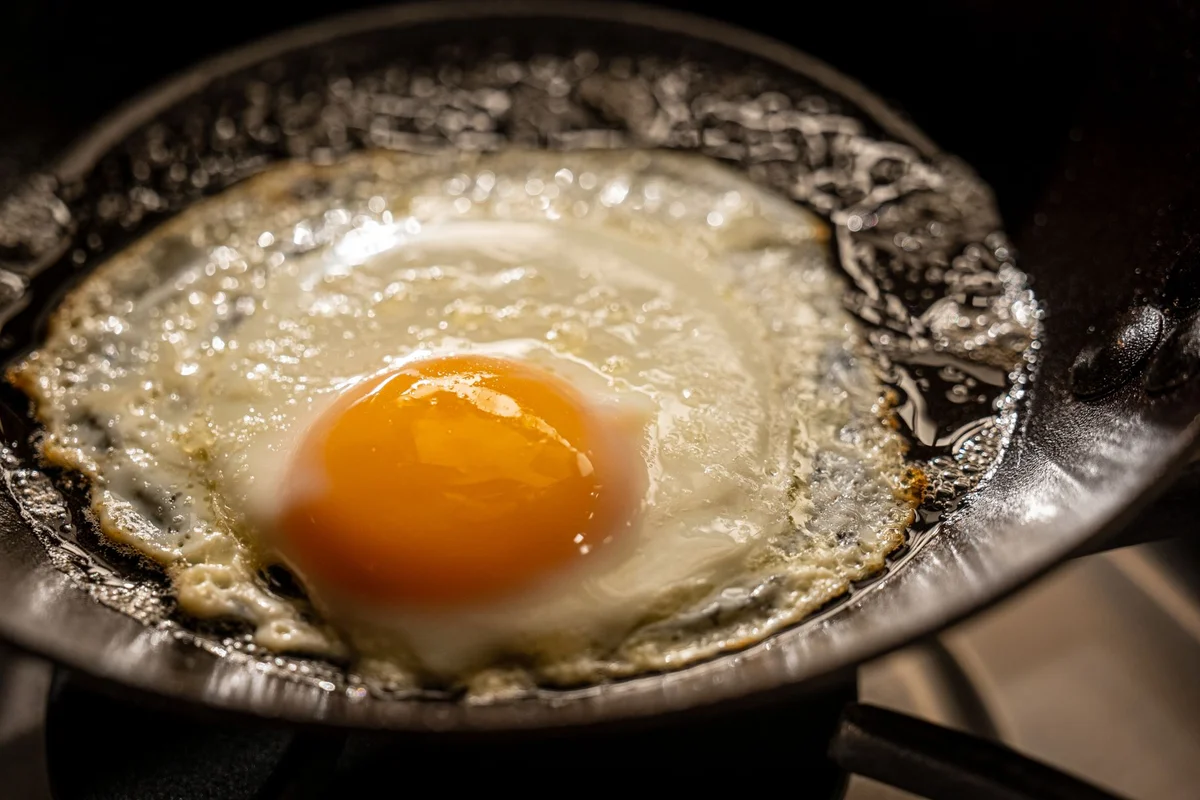
La grande majorité des recettes d’œufs au plat cuits des deux côtés ou au miroir, y compris les miennes jusqu’à présent, restent très vagues sur la chaleur. Si la cuisson est essentielle (et elle l’est pour obtenir des bords dentelés et un jaune coulant), il faut être plus précis. C’est pourquoi nous allons cuire les œufs à chaleur indirecte : nous allons préchauffer la poêle, puis la retirer du feu avant d’y faire cuire les œufs. C’est de loin la meilleure façon de réussir des œufs au plat cuits des deux côtés. Utilisez aussi les œufs les plus frais possible, car ils contiennent une proportion plus élevée de blanc épais. Dernière chose : si votre four fait partie d’une cuisinière plutôt que d’être encastré dans un mur, ne posez pas le couvercle de la poêle sur la table de cuisson pendant que la poêle chauffe, car il risque de chauffer lui aussi et de trop cuire les œufs. (Non, je ne plaisante pas. Nous visons la perfection.) Cette recette est apparue pour la première fois dans la saison 2 de Good Eats: Reloaded.
Ingrédients
- 1 tablespoon unsalted butter
- 2 large eggs, cold
- Pinch kosher salt
Préparation
- 1
Grab your favorite 10-inch carbon steel pan and rummage through your pots and pans until you find a lid that fits itA lid measuring 12 inches in diameter works on mine. Next, park said skillet in the middle of your oven. Crank the oven to 450°F. When the oven says it’s reached its thermal destination, let it sit in there another half hour... just to be sure.
- 2
Meanwhile, measure the butter out onto a square of parchment about the size of a Post-It note. (To tell you the truth, I usually just use a Post-It note but, as that’s not a food grade surface, I probably shouldn’t tell you that.) In any case, you want the butter soft but not melted.
- 3
When you know the pan is good and hot, break both eggs into a custard cup or small bowl.
- 4
Carefully remove the pan from the oven (you’ll need a side towel, oven mitt, or pot holder) and place it on the cooktop. Do not turn on a burner; this is just a heatproof place to park the pan. Add the butter and swirl the pan to coat. As soon as the butter coats the pan, but before it has fully melted, pour the eggs into the middle of the pan, season with the salt and cover with the lid.
- 5
Set your timer for 4 minutes...exactly 4 minutes. Oh, and warm a plate. There’s nothing worse than eggs going onto a cold plate.
- 6
When your extremely precise timing device notifies you, remove the lid and use a thin spatula to free the eggsThere’s always a tad bit of sticking around the edges. from the pan. Slide the eggs onto the warm plate and consume.
- 7
1 egg variation: Use an 8-inch skillet with a tight-fitting lid, half a tablespoon (7 grams) of butter, a smaller pinch of salt and a 3 1/2-minute cooking time.
- 8
A lot of eggs variation: If you want to feed more of a crowd, heat two or even three 10-inch skillets in the oven. (They’re amazingly cheap compared to other cookware, so I definitely recommend having at least three of the large ones and two of the small.) Pull out one skillet to cook two eggs at a time, then wipe out the used skillet and replace in oven to reheat while cooking with the other pan.
Cuisinez-la avec la recette originale
Cette recette vient de altonbrown.com. Leur page propose les photos, les notes et les astuces de l’auteur : le meilleur endroit pour la cuisiner.
Voir la recette sur altonbrown.com