
Receta de Chiacchiere (Galletas Fritas Italianas de Carnaval)
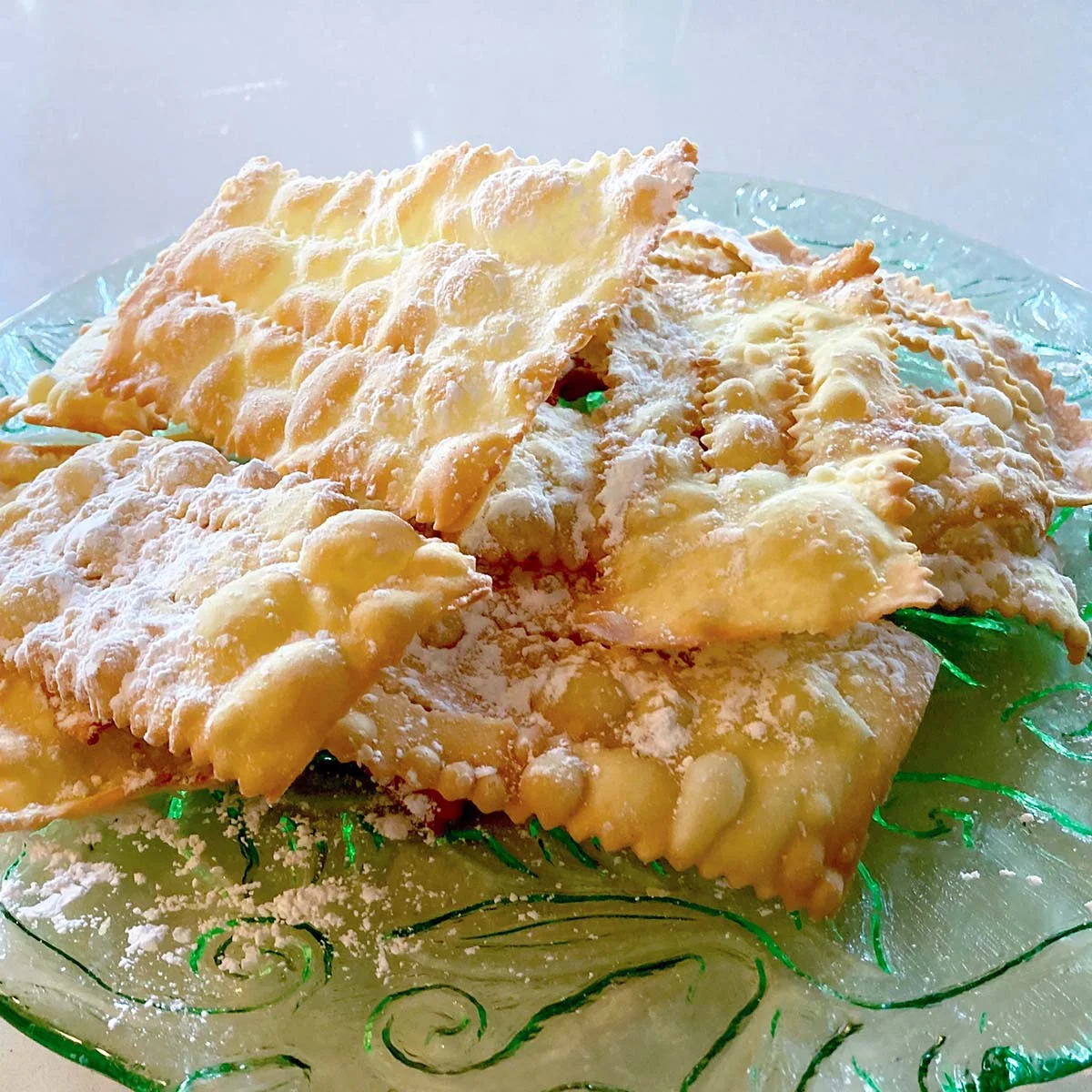
Crujientes, doradas y ligeramente espolvoreadas con azúcar glass, las chiacchiere son un dulce italiano por excelencia que se disfruta durante la temporada de Carnaval. Estas delicadas galletas fritas, también conocidas por otros nombres regionales como frappe, cenci o bugie, están profundamente arraigadas en la tradición culinaria italiana. Su nombre, chiacchiere, se traduce literalmente como cháchara o cotilleo, haciendo referencia probablemente al ambiente alegre y animado de las celebraciones de Carnaval.
Ingredientes
- 500 g flour (- 1.1 pound)
- 80 g granulated sugar (- 6 tablespoons)
- 50 g unsalted butter (- ~1/2 stick, softened at room temperature)
- 1/2 lemon (- zest)
- 1/2 teaspoon baking powder
- 4 tablespoons liqueur (- Grappa, Passito or Marsala wine)
- 3 eggs (- medium)
- 1 egg yolk (- medium)
- 1/4 teaspoon vanilla powder
- 1/4 teaspoon salt
- 1 liter vegetable oil (- 4 cups, for frying)
- powdered sugar (- for topping)
Preparación
- 1
combine: Start by sifting the flour to remove any lumps. Place the sifted flour, baking powder, and vanilla powder into the bowl of a stand mixer. Attach the paddle (or leaf) accessory to the mixer and run it briefly to combine the dry ingredients.
- 2
add: Next, gradually add the sugar, salt, and your choice of liqueur (Grappa, Marsala, or Passito), one at a time, letting the mixer incorporate each before adding the next.
- 3
add: In a separate bowl, beat the whole eggs and the additional yolk together until smooth. Slowly pour the beaten eggs into the mixer bowl while the machine is running. Mix for a few minutes until the dough starts to come together.
- 4
knead: Remove the paddle attachment and replace it with the dough hook. Add the softened butter and grated lemon zest to the bowl. Knead the dough on low speed for about 15 minutes. If the dough feels too dry, add a small amount of water (about 10 ml or 2 teaspoons). The finished dough should be firm yet pliable and easy to work with.
- 5
rest: Transfer the dough to a clean work surface and shape it into a smooth ball with your hands. Wrap the dough tightly in plastic wrap and let it rest at room temperature for at least 30 minutes. This allows the dough to relax, making it easier to roll out.
- 6
divide: After resting, divide the dough into smaller portions, about 150 g (5 oz) each, to make it easier to handle. Take one portion at a time and flatten it slightly with your palm. Lightly dust the dough with flour, then run it through a pasta roller set to the thickest setting.
- 7
roll out: Roll the dough several times, folding it in half after each pass, and gradually reduce the thickness setting on the roller. Continue this process until the dough is very thin, about 2 mm (0.08 inch). Lay the rolled-out sheets of dough on a floured work surface and let them rest for a few minutes to dry slightly. Then, using a pastry cutter wheel, cut the dough into rectangles approximately 5x10 cm (2x4 inches). For the traditional look, make two small cuts in the center of each rectangle.
- 8
fry: Heat the vegetable oil in a frying pan. The oil is ready when it reaches 160/170 °C (320/338 F). If you don't have a kitchen thermometer, test the oil by dropping in a small piece of dough. When bubbles form around the dough, the oil is ready for frying. It's very important to be able to maintain the right temperature during frying.
- 9
remove: Fry two or three chiacchiere at a time, being careful not to overcrowd the pan. Let them cook for a few seconds on each side until they are light golden and crisp. Use a slotted spoon to remove the fried chiacchiere from the oil, and place them on a plate lined with paper towels to absorb any excess oil.
- 10
serve: Once the chiacchiere have cooled completely, sprinkle them generously with powdered sugar. Serve and enjoy this traditional Italian Carnival treat!
Cocínala con la receta original
Esta receta es de recipesfromitaly.com. En su web tienes las fotos, las notas y los consejos del autor: es el mejor sitio para cocinarla.
Ver la receta en recipesfromitaly.com